
From New Dawn 155 (Mar-Apr 2016)
The romance with things occult and miraculous that gripped America in the seventies – a romance which was eventually to grow into the New Age phenomenon as it exists today – created a great gulf between the believers and the non-believers, between those who became heavily interested in these new ways of seeing the world, and those who thought them nothing more than an exercise in self-indulgence wilful credulity.
Emotions ran very high on both sides of this divide, and no one was more adept than my father at stirring up indignant opposition in the tents of scientific orthodoxy. When he told the news media that apples experienced the equivalent of an orgasm when eaten with a loving and respectful attitude, or that invisible, human-like nature spirits swarmed within the greenery of a well-tended garden – and worse, when these pronouncements were greeted with enthusiasm by journalists and readers alike – botany professors around the world felt their throats constrict and their scalps grow hot with rage. With his blustery demeanour and his love of sweeping prophetic generalisations, my father was an inviting target for attack, and for a time the debunkers were falling all over themselves to get in a shot at him.
This war between the believers and the unbelievers in which my father loomed so large was an eminently televisable event. From Mike Douglas to Dick Cavett to Johnny Carson, my father made the rounds of virtually every talk show of the day, usually in the company of a representative of the scientific community with whom he was expected to fall into passionate and vitriolic debate. The standard menu of events on these shows would be for Mike or Dick or Johnny to introduce my father and then stand back while he flared his eyebrows menacingly and described whatever improbable phenomena he had been investigating that week.
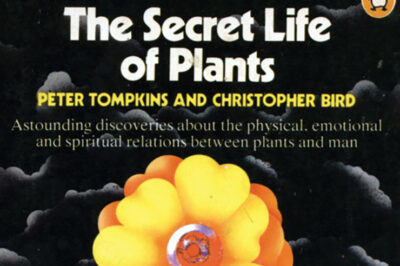
In the appearances following the publication of The Secret Life of Plants in 1973, a table-full of plants would be wheeled onstage attached to a galvanometer, a lie-detecting device that my father’s friend Cleve Backster had found could register what appeared to be the emotional reactions of plants as well as humans. The plants would then be threatened with uprooting, burning, and other such abuse, and the TV cameras would zoom in on the galvanomenter’s wildly fluctuating arrows. Finally, a suitably dour scientist would emerge, and he and my father would square off like a pair of fighting cocks in a Mexican bar, trading accusations for however much airtime remained to be filled.
My father brought a trademark intensity to the subjects he explored. When he argued that the ancients had lived in an expanded state of harmony and cosmic integration that the modern world had fallen tragically away from, and when he insisted that the door back to this expanded state was open to anyone who would simply listen to the whisperings of the plants they ate and walked upon, his fierce conviction was as persuasive as his ideas themselves.
At the centre of all the intensity and charisma my father managed to generate in those years stood a single, burning conviction: escape into a more fulfilling world of experience was truly possible. For my father, it was not enough to spin seductive descriptions of the Eden that life on the planet could become if only we would throw off our repressive neuroses and awaken to the larger life that lay in hiding all around us. One needed to act on this knowledge.
And act he did.
Reprinted with permission of the author from Paradise Fever: Dispatches from the Dawn of the New Age (Bloomsbury, 1997)
© New Dawn Magazine and the respective author.
For our reproduction notice, click here.