
From New Dawn 204 (May-June 2024)
You wanna be the next Danny Casolaro? This is not your thing. You don’t know this world.
– From American Conspiracy: The Octopus Murders
Danny Casolaro developed a body of research that inspired and affirmed the work of many researchers and writers in the last decade of the twentieth century.
– Kenn Thomas and Jim Keith, The Octopus: Secret Government and the Death of Danny Casolaro
Sometimes, the pursuit of truth can be dangerous. Sometimes, it can be deadly. Such is the case with Danny Casolaro, an American investigative journalist who either committed suicide or was ‘suicided’ for getting too close to the truth in 1991.
Those who are already familiar with his story and the stories of other independent journalists and whistleblowers who, like moths to a flame, got too close to the truth and got burned (some even killed), such as Mae Brussell, Dorothy Kilgallen, Gary Webb, Gary McKinnon, and Julian Assange, to name a few, know that Casolaro was pursuing a story about a major global conspiracy he named “The Octopus” for its many tentacles reaching into the darkest corners of covert operations and government cover-ups.
Shortly after his body was found in a hotel room bathtub (more on his death in Part Two), his wrists slit in what officials claimed was an act of suicide, other investigative journalists, family, and friends proposed that Casolaro was not a victim of suicide at all but was ‘suicided’ a la Jeffrey Epstein in an effort to silence him and bury with him what he was about to expose.
Now, a new Netflix documentary series – American Conspiracy: The Octopus Murders – offers additional insights into who he was, what he was pursuing, and why he may have met with an untimely death because of it.
Who Was Danny Casolaro?
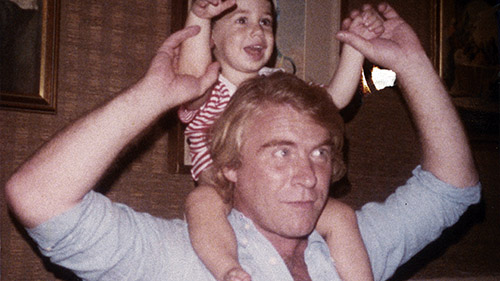
Born Joseph Daniel Casolaro, Jr., in 1947, Danny was one of seven children of a large and close-knit Catholic family in McLean, Virginia. Two of his siblings passed away when they were young, one of an ailment shortly after birth and the other from a drug overdose. According to his brother, Tony, who was the baby of the family, Danny was the apple of everyone’s eye.
In a recent article for The Cinemaholic, Tony described his older brother as extroverted and gung-ho, yet also kind and caring. One of Danny’s biggest faults was always being late, something Tony remembers because the last time he saw his brother before his fateful death, Danny was late to celebrate his son’s third birthday. But Danny made up for it by staying late and spending quality time with his family.
Danny graduated from Providence College in 1968, married a former beauty queen named Terrill Pace, had a son named John Daniel Casolaro III, and began a writing career as a journalist, with his work appearing in trade journals and tabloids like The Globe and The National Enquirer.
McLean, Virginia, was home to the CIA headquarters, and Danny was said to have been fascinated by espionage and had quite an adventurous streak, according to the Netflix four-part documentary series American Conspiracy: The Octopus Murders. Directed by Zachary Treitz, the true crime series follows Treitz and friend Christian Hansen as they investigate the Casolaro case. It was released on 28 February 2024 to great applause and introduces Casolaro and his work to a new generation of interested viewers and those dedicated to uncovering the shadow world of the Deep State.
The series features many never-before-seen interviews with key players in the Casolaro mystery. Hansen, who has an uncanny resemblance, even plays Danny in the docuseries re-enactments.
When Casolaro began his investigative career, few knew of him. After his death in 1991, he was all over the media, but over the years that interest waned except for those who know the case and the many questions about his alleged suicide.
The Netflixseries may make him a belated hero, a whistleblower of sorts who was writing a book to expose a global conspiracy he called The Octopus. That was also to be the title of his book, with tentacles reaching, as he claimed, into everything from the Iran-Contra affair, the October Surprise, the banking industry, money laundering, Malware, the Bay of Pigs, and even Area 51.
Danny Casolaro, an independent journalist who committed suicide or was murdered over 30 years ago, has suddenly been thrown back into the spotlight again, along with new revelations about his pursuit of truth and the cabal he believed pulled the puppet strings of so many major world events during his time on Earth.
More importantly, are they still pulling them?
The Man Behind the Mystery
This daring and adventurous writer was athletic and had a shock of wavy blond hair, giving him the look of a California surfer. He ran away from home at age 16 to hunt for lost Incan treasure in South America, then came back with plans to start a business importing corvina fish. Casolaro’s other interests included amateur boxing, writing poems and short stories, and raising purebred Arabian horses. His interest in writing and journalism would eventually consume his life and lead him to research many ‘hard’ subjects, such as the Soviet naval presence in Cuba, the Castro intelligence network, and Chinese communist smuggling of opium into the US. He also eventually wrote and published a novel titled The Ice King.
During the 1970s, he stretched his reporting wings on the Watergate scandal, then began writing about computers and computer-related technology as a trade journalist before he and his wife divorced in 1980, and Danny got full custody of their son. He wrote for Computer Age and eventually acquired Computer Age Publications, which published computer and data processing trade journals. It wasn’t necessarily the kind of journalism he longed to do, but it was a good job, and he knew his subject matter well.
While working at Computer Age Publications, one of his IT connections, Terry Miller, told him about the ongoing controversy involving a small, Washington, D.C.-based information technology company called INSLAW, Inc., which specialised in creating and marketing case management software for government and corporate use.
In the Netflix series, Miller states: “I was a consultant in computer contracts for 27 years in the Washington, D.C. area. I became well-known by writing a trade publication called Computer Age. And that’s how I met Danny. I felt like it was my fault ‘cause I had sicced him on the INSLAW case. And I still feel… anguish that I did that, but it can’t be helped now.” Miller had no idea then what the tip would lead to. “I told him, here’s a very suspicious case involving the Department of Justice. And he just found an astounding amount of stuff that nobody knew beforehand. It all started with the software and evolved to a much bigger story.”
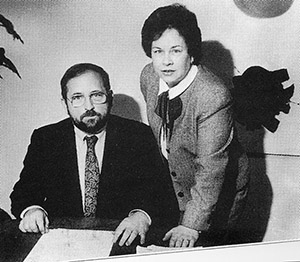
Casolaro soon met the founders, William “Bill” and Nancy Hamilton, who were by then in the process of suing the US Justice Department over alleged intellectual theft of what was described as a revolutionary criminal case-tracking software called PROMIS. Casolaro would soon become embroiled in the INSLAW/PROMIS case, which went on for years and included some big players that reached far beyond the tech world.
Treitz, who described Casolaro as “an adventurer, journalist, poet, novelist, and charmer,” told The Guardian, “It’s an interesting jumping-off point for a guy who could have gone a lot of different directions. Maybe he hadn’t fully realised his ambitions in life and he had a chip on his shoulder about that and wanted to prove himself with a big story. He also had a deep background in understanding the computer industry at that time in the early 90s.”
Treitz believes Casolaro’s computer background was a key reason why INSLAW was a “perfect storm of circumstances” because it would be a hard story for a political journalist to follow with no tech knowledge. It almost seemed as if the INSLAW story was made for Casolaro.
In the Netflixseries, Treitz follows his childhood friend, journalist Christian Hansen, in a quest to retrace Casolaro’s “metaphorical footsteps” by going over his handwritten notes, some never-before-heard audio recordings, and interviews with involved figures. Hansen had been a photojournalist for the New York Times and became intrigued by the Octopus theory ten years before the Netflix series. While filming the series, he formed friendships with some of Casolaro’s friends, many of whom were taken aback by the resemblance of the two men.
Hansen told The Guardian that his own introduction into the deep, dark world of The Octopus came at a time when there were allegations of intelligence community involvement in drug trafficking. This was at a time when the “war on drugs” was all over the American media. “That was something that surprised and shocked me and actually kind of blew my head off. At that point, what is real and what isn’t and what is conspiracy theory is actually a conspiracy that happened or is happening. That was what made me go a bit insane for a little while.”
No doubt Danny Casolaro experienced that same disorientation when he began looking into INSLAW, unaware of the size of the proverbial bear he was poking and where it would lead him. What he first might have imagined as a scandalous story of tech theft morphed into a monster involving the US Department of Justice and some very shady figures at the helm of a massive conspiracy.
The stuff of a journalist’s dreams.
INSLAW & the Broken PROMIS
Casolaro interviewed the Hamiltons, the founders/owners of INSLAW. They gave him details of the software their small tech company created to speed up case management for law enforcement agencies and improve tracking and record keeping. Called PROMIS – Prosecutors Management Information System – the case management software system was developed with funding from the Law Enforcement Assistance Administration (LEAA).
When the early version of PROMIS was released, its main users were the US Attorney’s Office of the District of Columbia and state and local law enforcement agencies. PROMIS was developed under LEAA contract, and when Congress voted to abolish the LEAA in 1980, the Hamilton’s continued to operate as a for-profit corporation and began marketing their PROMIS software to new users. In January 1981, INSLAW, which had been the non-profit Institute for Law and Social Research, became a for-profit corporation, and the Institute’s assets became INSLAW’s.
In the Netflix series, Charles Work, an INSLAW attorney, states: “PROMIS was a remarkably big, effective, powerful piece of software in an era where there were not many big, powerful pieces of software. This software could find relationships of all different kinds between cases. It really was revolutionary.”
In 1979, the Dept. of Justice contracted the then non-profit Institute on a pilot project using a version of PROMIS in four US Attorney’s offices. In 1981, having been happy with the pilot project results, the Dept. of Justice went ahead with a full implementation of the locally based PROMIS and issued an RFP – request for proposals – to install the program in the 20 largest US Attorney offices, as well as later installing word processor style versions of PROMIS into a number of smaller offices. INSLAW was awarded with a three-year, $10 million contract.
Things didn’t go as well as hoped, and there were issues with the computer software and disputes over the contract’s execution and service fees. Eventually, the Executive Office of United States Attorneys (EOUSA) accused INSLAW of overcharging and began withholding payments to the tech company. The word-processor version of PROMIS continued to pose installation problems, and in February 1984, the Department of Justice cancelled a portion of its contract with INSLAW. INSLAW would eventually be forced into filing for Chapter 11 bankruptcy in 1985.
Because proprietary rights of the mini-computer version of PROMIS and any later modifications funded by LEAA fell into the public domain, the government was given unlimited rights to the technical data and computer software that had been delivered under the contract. This posed a huge problem for INSLAW, which had planned to launch a commercial version called PROMIS 82 and resulted in a flurry of letters between INSLAW and the Dept. of Justice. Eventually, the Dept. of Justice signed off when INSLAW assured that PROMIS 82’s enhancements were paid for at the private expense of the company after its LEAA funding ceased.
Over the next year, there would be ample back-and-forth between the two entities as the Dept. of Justice battled over contractual differences, resulting in INSLAW being informed in 1983 that the original implementation contract required INSLAW to produce software that the government had unlimited rights to and that delivery of that software with any restrictions would violate the contract. Further attempts by INSLAW to delete enhancements to satisfy the Dept. of Justice and prove it was all privately funded pushed the company into financial ruin, even as there were still existing disputes over contract payments.
INSLAW filed a claim for services appeal, but the Dept. of Justice denied the claim. INSLAW could not avoid bankruptcy filing, although the Chapter 11 re-organisation was eventually converted to a Chapter 7 liquidation. Allegations continued right up to the level of the Supreme Court, which then declined hearing INSLAW’s appeal of the earlier dismissal of their complaint.
The Dept. of Justice knew that INSLAW couldn’t withstand having payments withheld. Hamilton was upset and became consumed with the case. Then, in April 1983, Hamilton received a phone call from the chairman of Hadron, a company with connections to the Justice Department. The chairman said to him, “We wanna buy your company.” When Bill said he wasn’t interested in selling, the chairman responded, “We have ways of making you sell.”
INSLAW repeatedly accused the Dept. of Justice of a conspiracy to steal PROMIS, which led to the Dept. of Justice’s own Office of Professional Responsibility opening an investigation into discrepancies and alleged false statements made to the Hamilton’s. INSLAW’s attorneys claimed that Judge Blackshear and US Trustee Edward White both committed perjuries. The Dept. of Justice’s Public Integrity Section investigated and of course found no proof of perjury and recommended declining prosecution.
This was followed by two US Congressional investigations, first by the Senate’s Permanent Subcommittee on Investigations, which found no proof to back INSLAW’s growing list of claims. The second was undertaken by the House Judiciary Committee, resulting in a report by Jack Brooks, Committee’s chairman, after a three-year investigation that faulted the Dept. of Justice and stated, “There appears to be strong evidence, as indicated by the findings in two federal court proceedings as well as by the committee investigation, that the Dept. of Justice acted ‘willfully and fraudulently’ and ‘took, converted, and stole’ INSLAW’s Enhanced PROMIS by ‘trickery, fraud and deceit’,” according to Richard L. Fricker’s 1 January 1983 report “The INSLAW Octopus” for Wired.
But this vindication of INSLAW would not last long.
Persons of Interest
Some of the newer evidence, in the form of statements and affidavits, used by INSLAW to make their claims and included in the report came from two particular witnesses, both of whom would play into Danny Casolaro’s ongoing journalistic pursuits.
According to Kenn Thomas and Jim Keith, authors of the 2004 book The Octopus: Secret Government and the Death of Danny Casolaro, it began with Jeff Steinberg, editor of the Executive Intelligence Review, the journal of the Lyndon LaRouche movement in the United States.
“Steinberg had put Bill Hamilton in touch with Michael James Riconosciuto, a 44-year-old denizen of the shadowy world of covert operatives. Riconosciuto first called Hamilton on May 18, 1990, and talked with him for two and a half hours, spinning a gossamer of connections that added startling new dimensions to the Inslaw case. Riconosciuto, in hundreds of collect telephone calls to Hamilton, revealed inside knowledge of the government conspiracy to steal PROMIS from the Hamiltons. He stunned Hamilton further when he told him that he had personally modified the PROMIS software as research director of a joint venture of the Cabazon Indian tribe of Indio, California, and the nation’s third-largest private security firm, Wackenhut.”
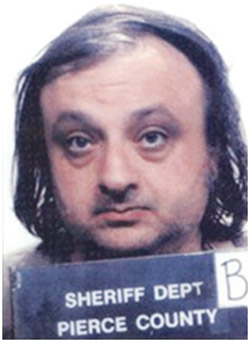
According to Thomas and Keith, Riconosciuto revealed that part of his job in modifying the software was to create a “back door access,” also known as a “trap door,” for spying on the files of its users.
“These users included Great Britain, South Korea, Japan, Jordan, Canada, Israel, Egypt, Canada, and Iraq – Bill Hamilton tallied the figure at ‘as many as eighty-eight countries’ – for use in such activities as tracking terrorists. According to Riconosciuto, Attorney General Edwin Meese had provided PROMIS to Dr. Earl Brian and Peter Videnieks from the Department of Justice, who had then supervised the Wackenhut/Cabazon project to copy the program.”
Riconosciuto swore in his affidavit that Earl Brian had given him a copy of the Enhanced PROMIS. This supported INSLAW’s earlier claim that Brian was interested in acquiring the software.
Brian was himself an interesting character and no stranger to controversy. He was an American physician and businessman who graduated from Duke University and served in the Army Medical Corp during the Vietnam War. He became a confidant of President Ronald Reagan. He served as Director of California’s Dept. of Health Care Services and then Secretary of California’s Agency for Health and Welfare under then-Governor Reagan. In 1980, he founded Biotech Capital, a venture capital firm that invested in companies developing medical technology and later in news and information services. In 1988, Biotech, then known as Infotechnology, acquired United Press International (UPI), a major American news wire service.
Infotechnology filed for bankruptcy in 1991, along with UPI and another of Brian’s companies and in 1995, he was charged with fraud and conspiracy, accused of inflating his companies’ values to secure loans, drafting hundreds of false invoices and other documents to conceal company losses and help the struggling UPI, and sentenced to four years in prison.
Riconosciuto claimed Earl Brian was in charge of the plan to steal PROMIS for more nefarious purposes. Brian was an officer of the Hadron company when they tried to bully Hamilton into selling INSLAW.
Thomas and Keith wrote: “According to Riconosciuto, Attorney General Edwin Meese had provided PROMIS to Dr. Earl Brian and Peter Videnieks from the Department of Justice, who had then supervised the Wackenhut/Cabazon project to copy the program. The theft of PROMIS, according to Riconosciuto, wasn’t all that was going on at the Cabazon Indian Reservation. The Cabazon/Wackenhut venture included the production of advanced weaponry, including biological weapons and fuel-air explosives (FAX), a new technology supposedly the equal of some nuclear weapons in explosive power. Riconosciuto claimed to have been involved in the production of the fuel-air explosives in collaboration with Gerald Bull of Space Research Corporation, an arms dealer who designed the ‘supergun’, and was murdered in Brussels, Belgium in 1990.” (More on the Cabazon connection in Part Two.)
Riconosciuto said that Meese had provided Brian with PROMIS as a pay-off on a favour and alleged that “William Casey, outside counsel to Wackenhut prior to his work in the Reagan administration, had hired him and Brian in 1980 to facilitate the now infamous ‘October Surprise’, in which the Reagan administration allegedly paid the Iranians not to release American hostages until after his election. Riconosciuto claimed that he and Brian had paid the Iranians forty million dollars in bribes. The PROMIS software, so Riconosciuto said, was Brian’s payment for his participation.”
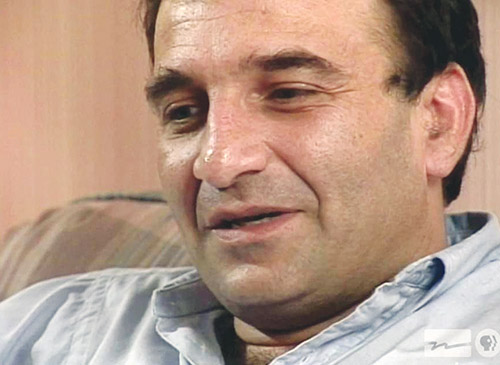
Another intriguing witness was Ari Ben-Menashe, who also provided affidavits claiming Earl Brian had both the public domain and the Enhanced PROMIS versions he brought to Israel, eventually selling the Enhanced Version to the Israeli government and Singapore’s armed forces. Ari Ben-Menashe also claimed Brian sold public domain PROMIS to Jordan and Iraq.
If Ben-Menashe’s name rings a bell, that’s because he was a former Israeli intelligence officer with Israel’s Military Intelligence Directorate and an arms dealer who, in 1989, was jailed for a year, then acquitted for attempting to illegally sell three military aircraft to Iran. He also claimed that Robert Maxwell, the father of Ghislaine Maxwell, Jeffrey Epstein’s partner who is now serving time in prison for sex trafficking, was a Mossad agent and that Maxwell’s mysterious death falling off his yacht was not an accident but an assassination for trying to blackmail Mossad. Ben-Menashe made the same claim in the media about Jeffrey Epstein, stating Epstein was working for Mossad to blackmail high-powered individuals by capturing them in sexual encounters with minors.
The INSLAW vs US Dept. of Justice battle would continue with Danny Casolaro’s investigation mentioned in a later review of what was called the Bua Report. In October 1991, William “Bill” Barr became the new Attorney General and appointed a retired federal judge named Nicholas Bua as Special Counsel to investigate INSLAW’s continued allegations. Eventually, in 1993, Bua released the 267-page report concluding there was no credible evidence supporting INSLAW’s claims that the Dept. of Justice conspired to help Earl Brian acquire PROMIS and that any evidence presented overwhelmingly showed a “woefully insufficient” support of the claim that the Dept. of Justice used “fraud, trickery and deceit” to obtain the Enhanced PROMIS. The report nullified INSLAW’s claims and stated the Dept. of Justice did not seek to influence the investigation into Danny Casolaro’s death and that the autopsy finding of suicide stood.
Bua was highly critical of Riconosciuto’s testimony, stating in the report that his statements in the affidavit were inconsistent with those he made to the Hamilton’s. Bua also found inconsistencies in Ari Ben-Menashe’s affidavit, especially Ben-Menashe’s later claim that he had “no knowledge of the transfer of Inslaw’s proprietary software by Earl Brian or the DOJ.”
INSLAW rebutted the Dept. of Justice at every turn, including a 130-page Rebuttal to the Bua Report, with claims that the Office of Special Investigations was, as the Hamilton’s put it, “A front for the Justice Department’s own covert intelligence service.” INSLAW’s rebuttal also alleged that “another undeclared mission of the Justice Department’s covert agents was to insure (sic) that investigative journalist Danny Casolaro remained silent about the role of the Justice Department in the INSLAW scandal by murdering him in West Virginia in August 1991.”
This was followed by another 187-page review by the Dept. of Justice, under Clinton-appointed Janet Reno as Attorney General, stating that Casolaro’s death was a suicide and rejecting INSLAW’s claims that he was murdered by OSI agents.
Bill Hamilton firmly believed that the Dept. of Justice prioritised paying off Earl Brian for helping President Ronald Reagan win the 1981 presidential election. PROMIS was the payoff and it was weaponised as a spying tool that it was never meant to be.
The Birth of An Octopus
As for Casolaro, he was onto something even bigger than software piracy.
Says Treitz: “In the year before he died, Danny had stumbled upon a computer software scandal that led him to a series of high-profile crimes which he said would rewrite US history.”
INSLAW became an entry point for Danny Casolaro into a much larger conspiracy involving a much bigger entity – a global cabal he believed had been around since the Second World War, an alliance of eight powerful people working completely in the shadows that he claimed made up The Octopus. Just how far their tentacles truly reached would cost Casolaro his life.
To read this article’s companion articles, support independent media by purchasing a copy of this issue.
Part Two of this article appears in New Dawn 205, available here.
Sources
Kenn Thomas & Jim Keith, The Octopus: Secret Government and the Death of Danny Casolaro, Feral House, 2004; covertactionmagazine.com/2024/03/11/netflix-series-on-the-octopus-murders-continues-cover-up-of-reporters-death-and-cia-crimes-he-threatened-to-expose; msn.com/en-us/news/crime/the-octopus-murders-everything-to-know-about-the-inslaw-case-conspiracy/ar-BB1j7hwt; muckrock.com/news/archives/2017/may/08/fbi-Danny-Casolaro; netflix.com/tudum/articles/american-conspiracy-octopus-murders-release-date-trailer-news; people.com/american-conspiracy-the-octopus-murders-true-story-8572439; stlmag.com/Stalking-the-Octopus; thecinemaholic.com/bill-hamilton; thecinemaholic.com/tony-casolaro; theguardian.com/tv-and-radio/2024/mar/05/the-octopus-murders-netflix; unsolved.com/gallery/dan-casolaro; web.archive.org/web/20240306190453/https://www.rollingstone.com/tv-movies/tv-movie-reviews/american-conspiracy-the-octopus-murders-review-1234976986
© New Dawn Magazine and the respective author.
For our reproduction notice, click here.