
From New Dawn Special Issue Vol 18 No 5 (Oct 2024)
When we talk about the ancient wisdom, at least in Western cultures, what we’re discussing is a vast heap of wreckage left behind by three savage campaigns of destruction.
The first of these hit in the twilight years of the ancient world, carried out by religious fanatics after Christianity was hijacked by the Roman elite and turned into an instrument of social control. The second came in the late Middle Ages when the Church hierarchy panicked at the rising tide of independent thought and created the Inquisition to stop free inquiry in its tracks. The third and most recent arrived with the Scientific Revolution when the rising mercantile-capitalist class embraced scientific materialism as its ideology of choice and used its power and wealth to crush alternative viewpoints. It’s a long and bitter story.
There’s another side to the tale, however. During each of these orgies of violence and oppression, there were people who risked everything to preserve what they could for the future. Afterwards, in turn, small groups of independent thinkers rejected the orthodoxies of their time and set out to recover some of what was lost. In the teeth of outraged resistance from the established institutions of the day and blind hostility from the masses, these succeeded in preserving some of the core teachings and practices of the old mystery traditions and reassembling others from the surviving fragments.
Imagine for a moment that some immense machine of glass and bronze was battered to pieces by a furious mob and the fragments trampled underfoot so that all that remained were fragments scattered through the gutters of a great city. Imagine that every record of the machine’s structure and function had been destroyed to keep anyone from figuring out how to rebuild it. Now imagine that many years later, you learn of the machine. Inspired by the old stories, you prowl the streets of the city, and when you find something that might once have been a piece of it, you pick it up, take it back home with you, clean off the grime, and then try to figure out how it might fit together with the other pieces you’ve already gathered, and what the shape of the whole machine might have been. This metaphor, taken from John Crowley’s visionary novel Aegypt, may give you some sense of the labour involved.
That work is still ongoing. Some parts of the ancient wisdom – some pieces of the machine, in terms of the metaphor – have been restored to full working order. Astrology and ceremonial magic, for example, were brought back into use in the nineteenth century, the former pioneered by Alan Leo and the latter by Eliphas Lévi; both can now be learned from many books and teachers, and practised with good results. Other elements of the tradition, such as alchemy and sacred geometry, are still only half-understood. Then there are fragments of the ancient lore that were destroyed so completely and lost for so long that they survive only as hints and whispers or as gaps where something once existed.
The Lost Word
One of those gaps lies at the centre of modern Freemasonry. Down through the years, there has been a vast amount of chatter about the secrets of Freemasonry, but there’s a detail that generally gets left out, though it can be found in plenty of publicly available sources: the Freemasons don’t have their original secrets any more. When a member is raised to the sublime degree of a Master Mason, he is told that the words and signs he is given are substitute secrets because the real secrets have been lost. To this day, every Master Mason is, at least in theory, pledged to the quest for the Lost Word.
What is this Lost Word? Nobody knows – not even the Masons. Of course, there’s no shortage of speculation. Devil worship, political conspiracy, kinky sex, the relics of a prehistoric civilisation on Mars, you name it, no matter how lurid or absurd, somebody has identified it as the Lost Word. Some of the other Masonic degrees pass on words that are supposed to be the Lost Word, but none agree on what it is or why it is so important.
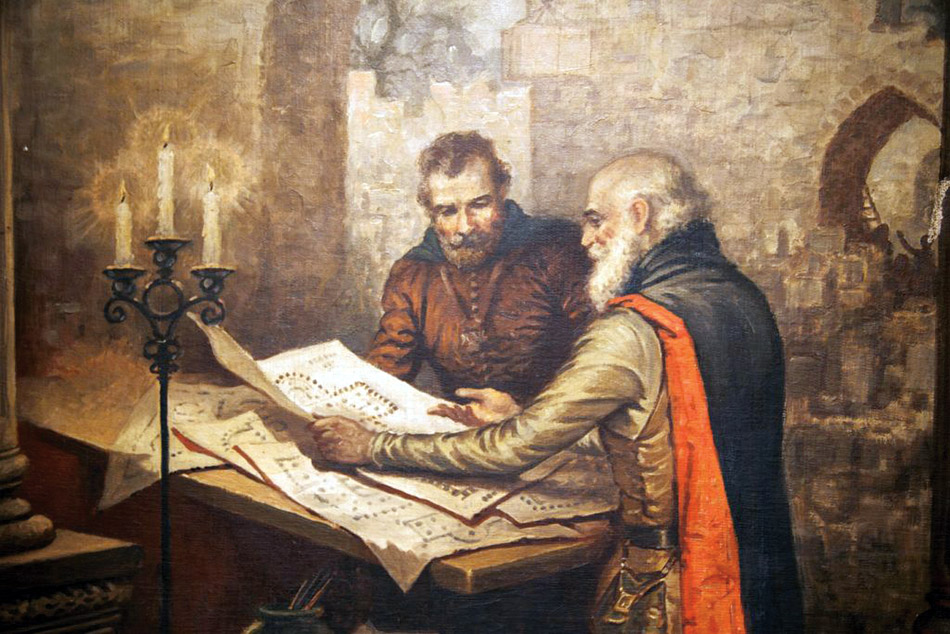
Let’s go deeper. The Master Mason degree ritual used in regular Masonic jurisdictions today derives from an original that appeared around 1720, three years after the founding of the first Grand Lodge in London. There is no record of who introduced it or where it came from; it simply shows up. It tells a story about the building of the Temple of Solomon, and that story includes – indeed, centres on – the disappearance of the Lost Word and the invention of the substitute secrets, which are to be kept until the real secrets are recovered.
Thus, it is clear that in 1720, three linked ideas were so important to the most influential Masons of the time that they put them into the Craft’s most important ritual. The first of these ideas was that Masons of some earlier period had known some important secret; the second was that the Masons of 1720 no longer knew what the secret was but thought they had some hope of recovering it; and the third is that it had something to do with the Temple of Solomon in Jerusalem, one of the most famous buildings of the ancient world.
Power of the Temple
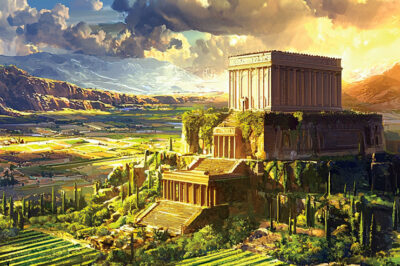
There’s plenty of information about the Temple of Solomon in ancient Greek, Roman, and Jewish sources, as well as a vast modern scholarly literature on the subject. Most of it is fairly straightforward, but one very odd detail runs through the old sources. This is the claim that while the Temple stood, it caused a remarkable increase in agricultural fertility in the land around it. The Jewish sources go into quite a bit of detail about this: from the time when Solomon built the Temple to its destruction by the Babylonians, the weather and the soil fertility of the region were different. After the destruction of the first Temple, that stopped, but when the second Temple was built by Jewish refugees returning from Babylonia, the effect returned and stayed in place until the Romans destroyed the second Temple in 70 CE.
The Temple of Solomon isn’t the only ancient temple about which that same claim was made. You can find it in legends surrounding temples over much of the ancient world. Where it occurs, you find certain other things reliably associated with it. The temples are built above underground water sources and their sites have to be chosen by special means. A flurry of odd taboos govern who can or cannot enter and under what conditions. Usually, though not always, they are surrounded by at least a narrow green belt of natural vegetation. Above all, certain rules of alignment and sacred geometry govern their placement and design.
Geographically, this is a weirdly selective tradition. It doesn’t appear in Africa outside of Egypt, except in a few northeastern African countries that absorbed a great deal of ancient Egyptian culture. It is found all over the ancient Mediterranean and extends east to India and some, but not all, of the island chains further east. Then, it appears in Japan, where it plays a central role in Shinto shrines but not Buddhist temples. Finally, it crops up in the Christian churches of medieval western Europe but is absent from Orthodox Christianity, Islam, and post-temple Judaism.
Knights Templar
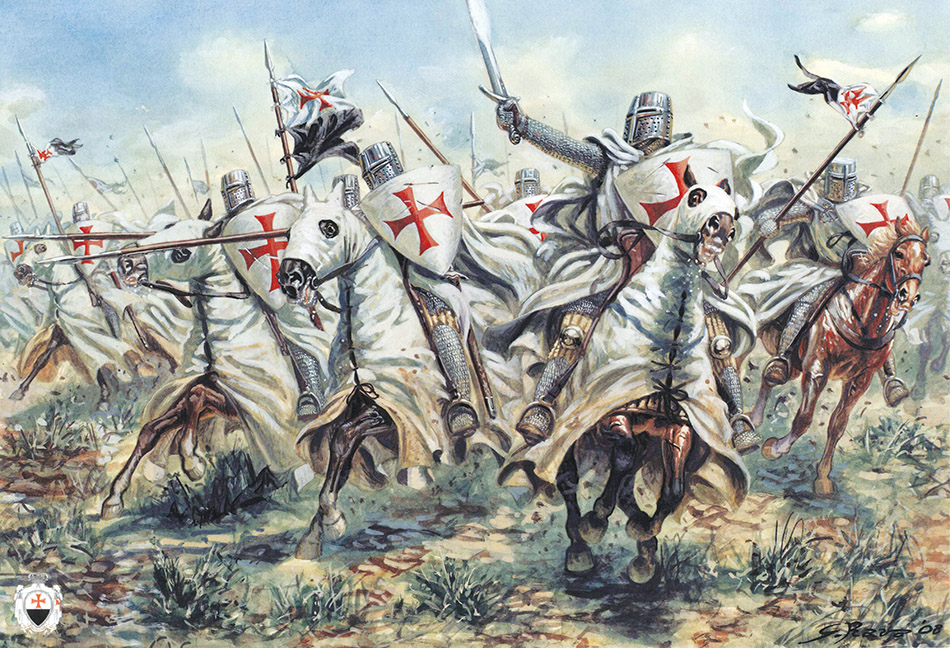
Western Europe in the Middle Ages apparently knew nothing about it until the time of the Crusades, where the tradition shows up first in churches built by the Knights Templar and spread from there. That turned out to be a clue of immense importance. The Templars – the Poor Fellow-Soldiers of Christ and the Temple of Solomon, to give them their original name – were founded in 1118 by nine French knights who had gone to Jerusalem with the First Crusade. They were dissolved by Pope Clement V in 1311 amid a flurry of charges of heresy and sorcery.
The Templars got their name because the original nine knights were housed on the Temple Mount in Jerusalem, atop the ruins of Solomon’s Temple; by the time of their abolition, they had landholdings in most of the countries of Europe. When the Order was destroyed, some of the members were burned at the stake and others were transferred to monasteries of less militant orders where they lived out their lives as ordinary monks.
There were two exceptions to this. In Portugal, King Dinis created a new order, the Knights of Christ, and had all the Templars in Portugal transfer into it; the Knights of Christ proceeded to play a remarkably active role in the great age of Portuguese navigation, sailing straight to islands in the Atlantic that (in theory) nobody in Europe knew about. Then there was Scotland, where the Pope’s rulings had no force because the whole country just then was under an interdict, and where Robert the Bruce was leading a war of independence against the English and needed every competent soldier he could get.
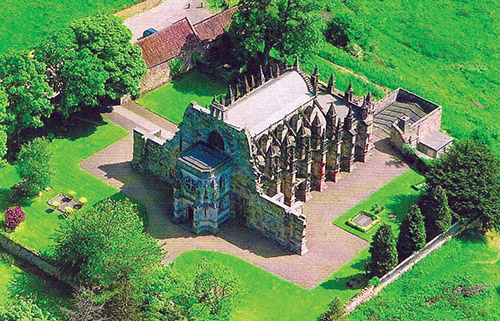
The Knights Templar had a significant presence in Scotland at that time; the village now called Temple, located next to the mysterious Roslyn Chapel, was their headquarters in the kingdom, but they also had many other properties and plenty of knights and officials to supervise them. Masonic tradition insists that the Scottish Templars promptly made a deal with Robert the Bruce. They fought for him at Bannockburn and elsewhere, and in return, he protected them from the Church and let them go quietly to ground.
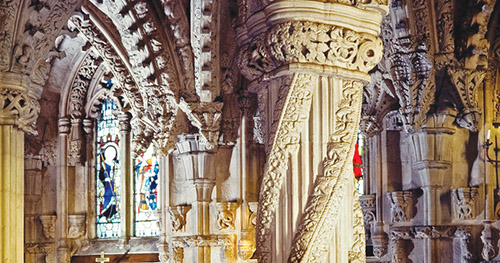
The tradition proceeds to claim that since the Templars had their own master builders and stonemasons – they had to since they themselves built the castles, churches, and other structures on their landholdings – some of these Scottish Templars ended up supporting themselves as master masons in the original sense of that term, and from that source, certain Templar legacies found their way into Freemasonry. It’s a matter of historical record, finally, that Freemasonry as we now know it, was in existence in Scotland most of a century before it appeared anywhere else.
All of this is familiar ground to most people aware of alternative history. What deserves attention here are the charges levelled against the Templars when the order was dissolved. Much of it was the same sort of canned libels that would be used later in the witch trials; some of it had intriguing parallels to the actual practice of heretical Christian sects in ancient and medieval times, which deserve more attention than they’ve gotten in the historical literature to date; but then there was the claim that they worshipped a mysterious idol named Baphomet, which made the crops grow. There was the issue of agricultural fertility again.
Holy Grail
That issue pops up again in another place at precisely the same time. The oldest known version of the story of the Holy Grail was written around 1190 by Chretien de Troyes, who claimed he’d gotten the story from Count Philip of Flanders, a Crusader who had close connections with the Knights Templar and the royal house of Jerusalem. Between 1190 and 1250 – that is, during the golden age of the Templars – the Grail got massive play in popular literature. They were strange stories, these legends of the Grail; they spoke of a secret passed down through the centuries by hidden guardians, which could only be revealed to those who asked the right question.
What is the Grail? That was one of the questions those who sought the Grail had to ask. A later generation of authors, heavily invested in mainstream Christianity, insisted that the Grail was the cup Jesus of Nazareth used at the Last Supper and redefined the secrets of the Grail as those of ordinary Christian theology. Go back to the earliest surviving Grail stories, those by Chretien de Troyes or Wolfram von Eschenbach, and you land in a far stranger world where the Grail could take many forms, and its ultimate secret was the power to make the fields flourish. That was why King Arthur’s knights went out in search of the Grail: it alone could restore the barren wasteland to fertility.
All this happened as sacred geometries and other traditions that were part of the temple tradition elsewhere in the world found their way into medieval European religious architecture. In its wake, monasteries were founded all over western Europe in desolate areas, which promptly became burgeoning agricultural regions capable of supporting not only monks but thriving villages. To this day, all across Europe, you can visit the ruins of long-abandoned settlements from the Middle Ages in barren upland regions that nowadays barely produce enough grass for sheep; old records and archaeological remains alike show that these villages once had thriving fields of grain and other crops – and in the centre of each is a church laid out according to the sacred geometries of the temple tradition.
Temple technology
Up out of the darkness of the centuries, like a shape in the mist, rises the dim shape of a forgotten technology – the temple technology, as I came to call it – that was once used by priests and priestesses across much of the Old World to make the fields flourish. Long before the beginning of recorded history, perhaps by sheer chance, perhaps through other means, people in certain parts of the world noticed that buildings of specific shapes built and aligned in particular ways affected the crops grown in nearby fields. Over millennia of trial and error, that original insight gave rise to two kinds of structures.
One of them uses structures shaped more or less like a stair-step pyramid: large ones, like the ziggurats of Babylon or the pyramids of the Mayas, or small ones, like the earth-deity altars that used to be found in every village in China before the 1949 revolution. The other uses square or rectangular buildings, usually oriented to the rising sun, which seems to have functioned as a resonance chamber. Both kinds of structures were built over certain specific geological features that create electrical discontinuities in the ground.
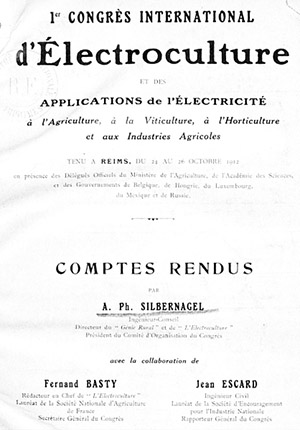
This matters because there are currents of electricity and lines of magnetic force, closely associated with one another, moving through the body of the Earth. Back in the 1920s, before the chemical industry got a stranglehold on corporate agriculture with their toxic fertilisers and pesticides, experimenters working with these earth currents developed a system called “electroculture” which sent a slight electrical charge through the soil; this resulted in sharply improved harvests. A building properly sited atop an electrical discontinuity in the earth, as it turns out, can build up a substantial charge of telluric electricity, which then streams outward through conductive areas in the soil.
This was one of the secrets of the Templars, one of the reasons that their landholdings in Europe produced bumper crops year after year to help pay for the Order’s castles in the Holy Land. In past ages, it had been a secret kept by many priesthoods and played a role in many ancient mystery initiations. (The Eleusinian mysteries, to cite only one example, centred on the fertility goddesses Demeter and Persephone, and at the climactic moment of the initiation ceremony, the new initiates were shown a newly reaped ear of grain.) It is one of the secrets of the Grail, and it – or more precisely, a word or phrase passed down from the Templars, probably in garbled form, that once communicated it – is the original Lost Word of the Freemasons. That, at least, is the most likely explanation for the tangled web of evidence that surrounds the old temple technology.
Like so many of the legacies of the ancient wisdom, the temple technology has been lost. The monasteries that once preserved it in Europe were destroyed in Protestant countries and subjected to the rigid ideological discipline of the Counter-Reformation in Catholic countries, breaking the links by which the knowledge was once transmitted from generation to generation. Elsewhere in the world, three centuries of colonialism, breakneck modernisation, and global warfare have left little intact, though it’s possible that even today, oral traditions at some isolated Indian temple or documents in a remote Shinto shrine might record some of the secrets of the lost temple technology.
One way or another, however, it is still possible for the Lost Word to be restored and the Holy Grail found. There are plenty of reasons why the global corporate monoculture might want to hide every surviving trace of a simple and scalable technology that uses natural energies and practices linked to traditional spirituality to make gardens thrive and fields bear bumper crops. Every one of those is also a reason why independent thinkers and researchers in today’s rising alternative culture might be interested in finding those traces and following them.
In terms of the metaphor introduced earlier, this is an important part of the lost machine and one that might be rebuilt and put to work. I can only hope that others will hear the call and join the quest for the Word that once made the fields flourish.
© New Dawn Magazine and the respective author.
For our reproduction notice, click here.