
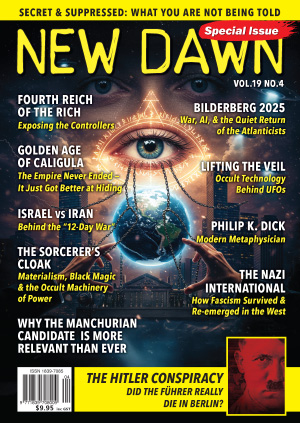
From New Dawn Special Issue Vol 19 No 4 (Aug 2025)
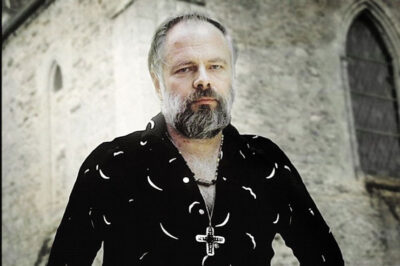
Best known to the wider world through the Hollywood interpretations of his works Blade Runner (from the book Do Androids Dream Of Electric Sheep?), Total Recall, Minority Report and others, Philip K. Dick was certainly not a typical ‘science-fiction’ writer.
Although his early books might indeed have featured ‘zap guns’ and ‘androids’, they generally did so only as ironic props in stories of bewildered human protagonists displaced by emergent technological absurdities and hostile bureaucracies.
Often plagued by relationship breakdowns (he had four wives) and an adventurous attitude to drug use, Dick wrote an extraordinary series of novels across the 1970s (and early 1980s) that have come to be known as his metaphysical or theological canon.
Inspired by a chain of otherworldly and mystical events in February and March of 1974 – Dick had often previously written of the fragile nature of what we perceive to be ‘reality’ – he now manifested a cogent and strikingly timeless alternate cosmology.
In essence, beginning with his novel Valis (originally written in 1978 but not published until 1981), Dick argued that the Roman Empire had never truly ended but instead transformed and adapted, continuing to dominate human civilisation through different masks and institutions.
In his view, what we perceive as historical progression – the fall of Rome, the rise of Christianity, the development of modern nations – was largely illusory. Beneath these surface changes, the same imperial power structure or spirit remained intact, continuously subjugating humanity.
That concept was deeply rooted in Gnostic philosophy, which Dick encountered (largely through the Nag Hammadi scriptures) during the intense metaphysical period following his transformative 1974 experiences. In Gnostic thought, the material world is ruled by a false god (or Demiurge) which keeps humans trapped in ignorance. Dick mapped this onto his understanding of the Roman Empire, seeing it as the earthly manifestation of this malign cosmic force.
Described as “The Empire That Never Ended,” it was one of Philip K. Dick’s most profound and complex philosophical concepts, central to these theological works and his sci-fi-tinged personal spiritual perspective.
The “Empire,” in Dick’s view, had constructed a “Black Iron Prison” – another key concept in his work – a metaphysical cage that traps human consciousness. This prison operates through multiple vectors, often hidden in plain sight:
- Deception and illusion: Making people believe they are free while actually being controlled.
- Information control: Manipulating what people know and believe.
- Psychological oppression: Creating systems that make resistance seem impossible or pointless.
- Spiritual blindness: Preventing people from recognising their true divine nature.
Dick argued that the Empire’s continuation could be traced through various historical periods:
- Early Christianity: Rather than defeating the Empire, Christianity was co-opted and became another tool of imperial control. The institutional church became a new form of Roman authority.
- Medieval Period: Feudalism and the Holy Roman Empire represented direct continuations of Roman imperial structure.
- Modern Era: Contemporary governments, corporations, and institutions all serve as manifestations of the same underlying malevolent imperial power.
The methods may have become more sophisticated – psychological manipulation rather than direct, brute force – but the essential structure remained unchanged.
In Dick’s universe, the Empire is opposed by a divine force he sometimes called “VALIS” (“Vast Active Living Intelligence System”), represented, in the book of the same name, by a self-aware satellite that orbits Earth, shooting Gnosis (divine knowledge) through a blinding pink laser beam. This plot device presented authentic divine consciousness attempting to break the illusion and liberate humanity.
Dick believed that around 70 CE, with the destruction of the Second Temple in Jerusalem, time itself became corrupted or trapped. This wasn’t simply a historical event but a cosmic catastrophe that fundamentally altered the nature of reality. In his cosmology, we are all living in a kind of temporal loop or stasis, where the same imperial patterns repeat endlessly under different disguises.
This temporal imprisonment means that what we perceive as progress – technological advancement, social evolution, political change – is largely illusory. The essential power structures remain unchanged because time itself has been hijacked by the imperial force. We experience the sensation of moving forward while actually trapped in the same historical moment.
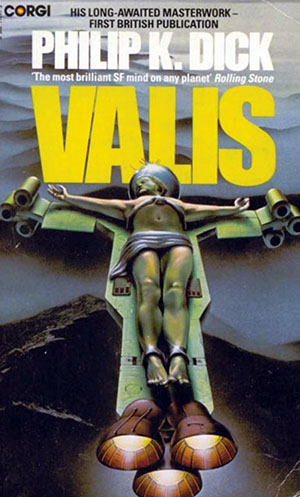
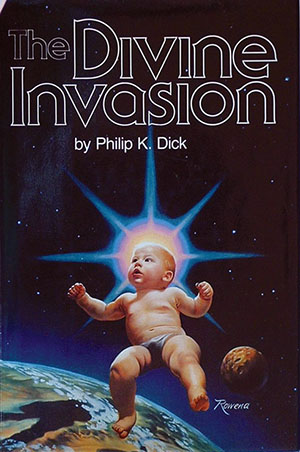
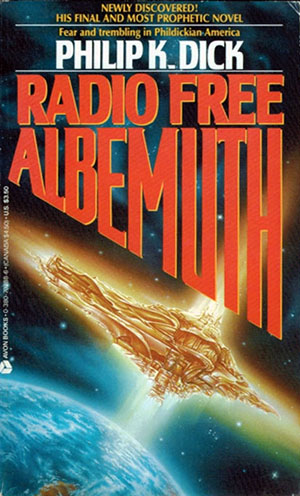
While couched across the novels Valis (1981), The Divine Invasion (1981), The Transmigration Of Timothy Archer (1982) and the astounding Radio Free Albemuth (originally written in 1976 but published posthumously in 1985) as a kind of quasi-hallucinogenic science-fiction mysticism, it should not be difficult to see Dick’s vision as hauntingly prescient and direly accurate of our historical and current circumstances.
According to Dick, the Empire now maintains its power through increasingly sophisticated methods:
- Information Warfare: Rather than crude physical oppression, the Empire now operates primarily through the manipulation of information and perception. People are controlled not by chains but by false beliefs about reality itself.
- Psychological Programming: The Empire creates mental patterns that make resistance seem impossible or pointless. People become complicit in their own oppression by accepting the Empire’s version of reality as natural and inevitable.
- Institutional Capture: Every institution that might oppose the Empire – religion, education, media, government – is eventually captured and turned into another tool of control. Revolutionary movements are co-opted before they can pose any real threat.
- Temporal Confusion: By keeping people trapped in the false timeline, the Empire prevents them from recognising the true nature of their situation. People cannot resist what they cannot perceive.
His “Black Iron Prison” also represents the metaphysical structure that enforces the Empire’s control. It was Dick’s most powerful metaphor for the nature of oppression itself. Indeed, the Black Iron Prison is not a physical location but a state of consciousness – or rather, unconsciousness. The Prison functions through:
- Perceptual Limitation: The prison limits what people perceive and understand. Reality appears solid and unchangeable because the prison prevents people from seeing its constructed nature.
- Ideological Constraint: The prison functions through belief systems that make alternatives seem impossible. People remain trapped not because they cannot leave, but because they cannot imagine freedom.
- Temporal Imprisonment: Like the Empire, the prison operates through time distortion. People experience the illusion of temporal progression while actually being held in stasis.
- Collective Delusion: The prison is maintained through shared false beliefs. It’s a consensus reality that people collectively create and maintain, even as it oppresses them.
Directly intersecting with contemporary descriptions such as Matthias Desmet’s concept of “Mass Formation Psychosis” and the heaving totalitarianism that surfaced during the COVID Operation, there seems little doubt that Philip K. Dick’s ‘paranoid’ cosmology presents a vital roadmap for attempting to understand what passes for the spiritual, political, philosophical and informational landscape of the 21st century.
In classical Gnostic thought, the Demiurge is a false creator god who has trapped divine sparks (human souls) in the material world. Dick identified this figure with the “Empire That Never Ended,” seeing the Demiurge as the cosmic principle behind all earthly oppression.
While traditional Gnosticism often portrays the Demiurge as a cosmic principle, Dick historicised it, seeing it as actively manifesting through specific human institutions and historical periods. The Roman Empire wasn’t just influenced by the Demiurge – it was the Demiurge’s most successful Earthly incarnation.
The Archons, in Gnostic cosmology, are the Demiurge’s agents who maintain control over the material world. Dick saw these as manifesting in various forms such as political leaders, religious authorities, and institutional powers, who serve the Empire’s interests, often without realising their true role.
Furthermore, Dick identified Psychological Archons, internal forces that keep people trapped – fear, despair, conformity, the desire for security over truth. These are the ‘guards’ of the Black Iron Prison. And in Dick’s more modern interpretation, Information Archons are the forces that control information flow – media, education, propaganda systems that shape perception and belief.
Dick’s Gnostic perspective led him to a radical critique of institutional Christianity. He believed that Christianity had been co-opted by the Empire almost from its beginning, turning the revolutionary message into a tool of control. Orthodox Christianity promises salvation in another world, which Dick saw as a way of preventing people from recognising their potential for liberation in this world. And, Dick suggested, much of institutional Christianity actually worships the Demiurge while believing it worships the true God. Indeed, orthodox Christianity emphasises faith over direct knowledge, which Dick saw as keeping people dependent on external authority rather than developing their own direct divine consciousness.
In earlier Dick novels (such as Do Androids Dream of Electric Sheep? from 1968), he subtly presents questions about consciousness and the true nature of what it means to be human, blurring and shifting the lines between the ‘androids’ of the title and their ostensible human creators.
John Carpenter’s 1988 film They Live shared many settings and themes with Dick’s sublime novel Radio Free Albemuth. In the book, a scattered resistance battles the treacherous Archonic infection represented by President ‘Ferris F. Freemont’ (obviously, FFF is numerologically 666), as underground culture furtively keeps hope alive – situations loosely mirrored in the film. Similarly, the iconic 1999 film The Matrix presents ‘Dickian’ and Gnostic concepts wrapped in an action/sci-fi garb.

From 1974 until his untimely death in 1982, Dick produced a multitude of research, journals and letters that dealt with the events of “2-3-74” and his place in the great cosmic mystery. Condensed from over 8,000 pages of material, The Exegesis Of Philip K. Dick runs to more than 900 published pages and explores, in depth, Gnostic and unmistakeably Lovecraftian perspectives – indeed, “the Demiurge is still under the waters, dead but dreaming.”
While Philip K. Dick clearly and knowingly presented timeless Gnostic themes in a modern form, it is hard to imagine a time and place more necessary (than here and now) to examine concepts such as the constructed and manipulated nature of ‘reality’, the cancerous, imprisoning scourge of materialism, and the industrially designed death of the soul.
Indeed, it really is Philip K. Dick’s world… and we live in it.
© New Dawn Magazine and the respective author.
For our reproduction notice, click here.