

From New Dawn 157 (Jul-Aug 2016)
As a tribute, we are posting this article by Gordon White, who made his transition and passed from this world in May 2026. Although the article was written in 2016, its analysis and Gordon’s advice remain highly relevant in today’s chaotic world.
Humans have a tendency to overestimate short term risks and under-estimate long term ones. You see this when you watch people nervously smoking a cigarette at the airport because they are anxious flyers: what is actually most likely to kill you?
You see this on a wider level when you watch whole industries over-react to short term wobbles and then under-react to long term changes… The music, publishing and news businesses all overspent on short term Internet trends while failing to correct their spectacular decline. (Remember when Murdoch bought MySpace?) The same reaction is now found in mature Internet businesses that pay billions of dollars to acquire companies that have never made a cent in revenue, such as Facebook’s acquisition of Instagram.
Today, most people are abstractly aware that automation is increasing, that we are in some sense living through the rise of the robots. We bite the bullet and use the automated checkouts at the supermarket, we observe the novelty of self-serve kiosks at fast food restaurants, we have long-since adjusted to online banking and ATMs. In 2015, drones fired more ammunition than warplanes in Afghanistan, a first in history.
These are early stage changes. To draw an analogy with the Industrial Revolution – and we should draw many analogies with it – these changes are akin to those first, crude, automated fabric looms invented in the north of England. The railways and mega-factories are still to come. What we fail to notice when we queue for the supermarket checkout is we are at the inflection point in the automation revolution. Over the last thirty years, this process has already largely removed well-paid working class industrial jobs. On the other side of this inflection point, the graph gets mighty pointy, mighty quick. It is where the majority of Middle Class jobs live.
Jobpocalypse
Today, 20% of American households do not contain even one employed person. And of those that are employed, only 44% work more than thirty hours a week. The alleged global economic recovery has been a story of great jobs at the top – finance, engineering, etc – and loads of jobs at the bottom – bartending, office cleaning, Uber driving – but nothing in the middle. Education, administration, and construction jobs for instance – all mainstays of the middle – are still in decline. What this means is that 95% of post-recession income gains have gone to the top 1%. Fully 100% of the gains have gone to the top 10%. The net result is that the jobs added in the US economy since the Great Recession are paying 23% less than the jobs lost.
According to Pew Research, two out of three American households were considered Middle Class in 1971. Today it is less than half. This state of affairs is primarily caused by the replacement of higher paying jobs with lower paying ones, through the impact of both automation and offshoring policies such as NAFTA. From 2004 to 2014, median incomes in the US fell 13%, while household expenditures increased by 14%.
The impact of these calamitous numbers is and will continue to be felt outside America’s shining seas. It is the largest economy on earth, the principal trading partner for most of the world and 70% of its GDP is based on consumption. What happens when there is no money left over for consuming?
In his excellent book, Get a Job, Build a Real Career, Defy a Bewildering Economy, independent economic commentator Charles Hugh-Smith writes the following:
There is a widespread sense of disbelief that automation can eat high-skill, middle-class jobs in the same way that it ate low… factory jobs. In this view, the 50 employees of Craigslist wiping out thousands of middle-class jobs in the classified ad industry was a fluke. But the reality is that the strongholds of middle-class jobs – for example, healthcare, education, government, and national defense – are all increasingly unaffordable and therefore ripe for wholesale creative destruction of costs, jobs and business as usual.
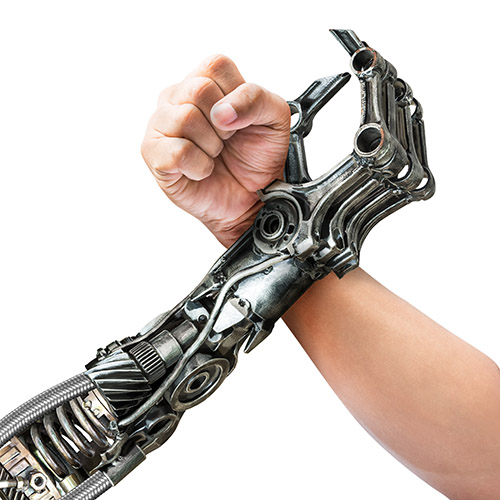
An Oxford University study predicts 35% of existing UK jobs are at risk of automation in the next 20 years. In Australia, that number is predicted to reach 44% over the same time frame, according to a recent federal government report.
An obvious manifestation of automation’s impact is not just unemployment, but underemployment, commonly referred to as the gig economy. About a third of the US workforce are either independent or contract workers. Share of gig workers in manufacturing, health and education has doubled, and has increased by a factor of five in public administration. The same trend is being mirrored in Australia.
For certain, accountants, dentists and nurses will still exist in twenty years time. However there will be far fewer of them and the costs associated with accessing them may well be prohibitive. This trend is already emerging. After shedding 220 financial advisors, the Royal Bank of Scotland replaced them with artificial intelligences. To speak to a real human for financial advice, you need to have £250,000 or more. (RBS received a total of £45 billion in taxpayer bailouts during the financial crisis.)
The RBS approach to providing financial advice is an example of what is known as a Mostly-Autonomous-System. It is significantly cheaper to automate 97% of a function than it is to automate 100% of a function. The MAS approach is what we will experience first and most. Where once there were fifty nurses, there may be three, whose principal function is monitoring of the MAS performing the lion’s share of nursing duties, stepping in for the final 3% of tasks or as needed. The same thing will happen for accountants, doctors, teachers, dentists… really anything that relies on either repeated tasks or access to a previously rote-learned body of knowledge as these are both functions that are already better performed by artificial intelligences and robots.
The suspicion that technological change may not be all it is cracked up to be is commonly called the Luddite Fallacy, which tells you everything about how it’s regarded by economists. Nevertheless, a Luddite-Lite view has a lot going for it. Technological change can indeed sometimes increase GDP but these increases are unevenly distributed, which is to say they make the rich richer. At the peak of its market capitalisation – USD$28 billion – Kodak employed 140,000 people with wages that could support property ownership and the raising of families. When Instagram was acquired for a billion dollars, it had thirteen employees and had not made a cent in revenue.
During the nineteenth century, around half of the US population was employed in agriculture. Now that is less than two percent. It was the fundamental changes caused by the Industrial Revolution that triggered this shift. In the opening years of the twentieth century, the largest employment sector in the US economy was domestic service. So the suspicion that things get very bad before they (might) get better is well founded.
Demography is Destiny
The average age of the Japanese farmer is 67. Across the developed world, the average age is 60. A G7 meeting held in April in Japan’s northern prefecture of Niigata discussed plans for replacing these aging farmers with an automated workforce, with robots. These plans are emblematic of the coming world’s response to the demographic time bomb that is the retirement of the baby boomers. Reducing human sovereignty over our own food supply builds in catastrophic risk to our medium term future but, for central planners, this appears to be a better choice than re-engineering a healthier, more interactive economic ecosystem. It costs less.
In the US, 10,000 people will retire every single day between now and 2030. Sixty percent of them are retiring without any savings. Whilst it might seem like good news that baby boomers are departing better paying jobs that can be subsequently filled by a younger generation afflicted by high unemployment, it is anything but. Leaving aside the enormous burden such a reality has for the West – increased healthcare costs paid for by rising taxes that further reduce demand in the economy – retired people spend very little and those that retire with no money spend even less. The evaporation of demand out of economies that overwhelmingly run on consumption means all those cushy, well-paid boomer jobs will ride off into the sunset with those that occupied them.
The two main pistons driving fundamental and permanent changes in Western economies are the rise of automation and the demography of the population. This is how we can tell that something very different to the traditional ‘boom and bust’ cycle is happening. Surprising opportunities may present themselves in the short term because short term changes are unpredictable. Long term changes, on the other hand, are very predictable.
Much of this long-term predictability comes down to the market’s intrinsic inability to discover the cost of long-term consequences. It has no way to price in what happens to economic activity when we lose forty percent of Middle Class jobs, or what happens to food prices when Sydney expands into its nearby farmland. Price discovery is an immediate function which means, by definition, it can’t model future opportunity cost. So there is no inherent mechanisms that allow us to adjust on an ongoing basis to the risks and opportunities these changes present. And you only need to look at the state of politics in the world today to realise we will get no help from that quarter. Politicians are allergic to hard truths or tough challenges, lest either of them spoil their chances for re-election.
Nearly two thirds of Australia will become dependent on the labour force by 2046, due to the retirement of the baby boomers and the rise of the robots. Our tax base will be shrinking just as we need it to be about five times larger to pay for increased healthcare and welfare programmes. This funding gap will result in an increase in taxation, which pulls more demand out of the economy, which will further shrink the tax base, which was the problem in the first place. The same funding gap will provide unstoppable incentives to further automate areas reliant on public funding such as health care and education in an effort to engineer out as much cost as possible. Thus these two trends compound on each other, like runaway climate change.
When it comes to fighting the robot army, we are on our own. This is both the bad news and the good news.
Pivot to the Real
In the medium term, we are all at risk of either unemployment or casualisation/underemployment. Over the same time period, policy responses will reduce your earning power through a combination of tax increases and inflation. Inflation being the only tool left for central planners to keep government debt actually payable, especially if they stump for a universal living wage as a stopgap solution for the impact of automation. (This appears to be the most popular policy currently being floated by think tanks and academics.) Whichever way you slice it, whatever combination of future effects impacts you personally, the short term response calls for dramatic, even radical, cost reduction.
We should be doing this already as you probably do not need to be told how the cost of living has already shot to the moon at the same time median incomes have declined. In the US, food has doubled since 1978, housing has more than tripled, higher education is eleven times higher, and the cost of raising a child increased 40% between 2000 and 2010. We thus arrive at a situation where – according to a recent Bankrate poll – almost two thirds of Americans do not have enough savings to cover a $500 repair bill or a $1,000 emergency room visit. The US federal poverty level for a family of five is $28,410, and yet almost 40 percent of all American workers do not even bring in $20,000 a year.
Over the last thirty years, as our domestic dwellings increased in size and cost, we had fewer and fewer people living in them. It is a heresy of heresies to say this, particularly in Australia, but single family or even single person dwellings are not the norm. Since humans started building permanent shelters about ten thousand years ago, multi-generational occupancy has been the norm. The last fifty or so years of the mortgage industry will ultimately be seen as a noble eyeblink in the human story.
Multi-generational or multi-family dwellings provide a tremendous amount of power and sovereignty over the looming changes:
- They provide greater economic redundancy if one or more people becomes unemployed or underemployed.
- They reduce energy costs per person.
- They can reduce childcare costs.
- They minimise food waste and cost.
- They can reduce the cost of elderly care.
- They increase the total amount of time available to adults in the household to pursue additional economic activity via side projects, an essential step in the casualisation of the workforce.
- They spread the cost and inputs associated with improved water harvesting and domestic food growing, thus reducing living costs and improving health outcomes.
- They have more than forty years of scientific proof that these living conditions improve the psychological health of its occupants, particularly young children and the elderly, who both benefit tremendously from increased family time.
Newspapers are fond of mocking Millennials for their seeming inability to move out of the family home. This is economically unreasonable as they are competing for jobs that have declined in income by almost a quarter at a time when house prices are at historic highs.
It seems Millennials are also more aware of the extreme changes that are looming, even if they struggle to articulate it. Sixty percent of Australian students are currently training for jobs that will not exist in the future. Jan Owen, chief executive of the non-profit Foundation for Young Australians, told the ABC: “Most 15 years olds are going to have up to 17 jobs in five different industries and in order to be prepared for that kind of working life, which is very, very different to their parents or their grandparents, they are going to need to, as well as having the disciplines that they study, they are going to need to have a very broad based what we would describe as enterprising skill set.”
The newspaper mockery completely misses the wider trend going on here. Multi-generational occupancy is but a small subset of what I call the ‘pivot to the real’. Unlike the boomers, Millennials value experiences over status objects such as large cars, they prefer team or networked activities to solo endeavours, they value local over expensive.
They are also about to become the largest demographic cohort in the workforce, as more and more boomers retire. In fact, by 2025, Millennials will make up 75% of the Western workforce, bringing their values and attitudes with them. Although it does not currently look like it, I have more confidence that the independent greengrocer in the middle of town has a brighter future than the big box retailer on the edge of it.
So it is not just the boomers and their jobs that are heading off into the sunset, it is also the boomer version of the good life. Replacing it – whether forced through reduced economic participation or unforced through choosing to participate in these cultural changes – will be the return of the real, the authentic, the shared experience. We should see this as a hugely exciting opportunity. Call it the shared glass half full.
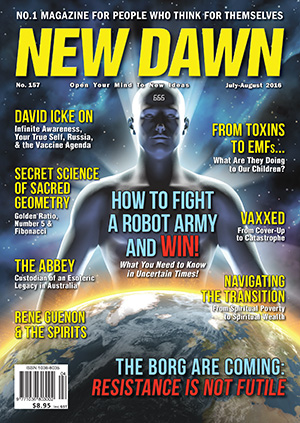
Seeing off the Robots
Described in a single sentence, seeing off the robots is all about positioning your life so that it gains from volatility instead of being adversely impacted by it. An example: Your redundancy should free up more time for childcare or family support, thus freeing up other household members to increase their paid workload. You can also use the time for side projects and retraining. These scenarios can and should revert or shift with any subsequent changes. Fundamentally, an economy is a learning system and right now it is heading off to Big School. Gaining from volatility means creating a life that learns as it learns, adapts as it adapts.
On a practical basis, this involves:
- Getting and staying out of debt: Debt adds future risk just as the future is getting riskier. Servicing debt reduces your buying power even as we head into a world where it is already reducing.
- Assert sovereignty over your own food supply: This does not mean growing all your food and harvesting all your water, but it means doing as much of both of those things as possible in your domestic environment. At the same time it means being aware of your local food supply chain and supporting it.
- Continuous training: Embark on a lifelong practice of cultivating rare – and thus by definition – in-demand skills. You will have multiple careers, multiple sources of income… probably even at the same time. Be the nurse who knows how to operate a Mostly Autonomous System, not the nurse that is replaced by one. Value flows only to what is scarce. MBAs aren’t scarce. Knowing how to use data management platforms is scarce.
- Location, non-Location, Location: Radically rethink your attitude to place. Be prepared to, and excited by the prospect of, dramatically reducing cost even as you improve your quality of life. Also be prepared to uncover mankind’s noble, nomadic roots and move where opportunities abound. Tremendous growth will accompany these economic changes but that growth will not be evenly distributed. Fish where the fish are, so to speak.
Finally, and probably of most interest to readers of this magazine, reposition what wealth and meaning are for you. The Joneses have retired. There is no need to keep up with them. A new understanding of life’s goals and purpose is emerging just when we need it most and it falls to the spiritually-inclined to both lean into this trend and be leaders of it.
In Tibet’s Amdo region, shamans watch the clouds from the mountain tops to alert the villagers down below of weather changes. In this system, weather is caused by an interaction of the spirits, humans and Nature. These shamans intercede and engage with the spirits to modify the weather for the whole community. This is a wonderfully useful metaphor for our own roles in the dynamic interaction between the rise of automation, changes in the economy, changes in demography and the potential for something new and authentic emerging from in amongst all this risk and anxiety. The possibility of transmutation for those brave enough to climb up the mountain is very high.
There is something of a fairy tale quality to the process we are experiencing. Think about it. It took the rise of the robots – the apogee of the artificial – to trigger the appeal of the analogue, to inaugurate the return of the real. So this is how you defeat a robot army, not by being more robotic, but by being more human.
Gordon White’s book, The Chaos Protocols: Magical Techniques for Navigating the New Economic Reality (Llewellyn, 2016), explains how we can navigate these changes and even benefit from them. The Chaos Protocols is available from online booksellers.
© New Dawn Magazine and the respective author.
For our reproduction notice, click here.