
From New Dawn Special Issue Vol 18 No 2 (April 2024)
In 1929 something unexpected was discovered in a country that was already brimming with the unexpected. A burial ground containing the remains of 300 individuals with elongated skulls was found in the township of Paracas in Peru. Believed to have lived around 3,000 years ago, these people were unique in their morphology – they had massively elongated skulls, they were tall, they were of all ages and genders, and a large number of them had the remnants of red hair clinging to their skulls.
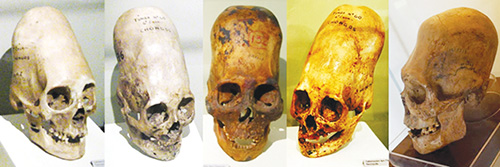
These skeletons have been the subject of great debate for almost 100 years and are generally agreed to be examples of artificial skull deformation, which is the practice of deforming the head to redirect the growth of the skull. However, a human skull that is elongated after birth displays flattening of both the forehead and the back of the head, and the skull volume is not changed. The Paracas skulls are somewhat different – they are larger than an artificially elongated human skull and have a correspondingly larger internal volume.
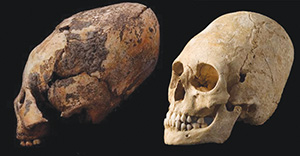
In addition, the skull morphology is quite different – the skull is not flattened, and a number of physiological differences can be easily identified. For example, the sagittal suture, which runs across the top of a human skull, is entirely absent, and the foramen magnum (the hole in the bottom of the skull that connects the neck) is situated towards the very back of the skull. The eye sockets are greatly enlarged, and it appears there are some foramina (the openings in the skull for nerves and blood vessels) in different places, all of which precludes these skulls from being able to be considered truly human.
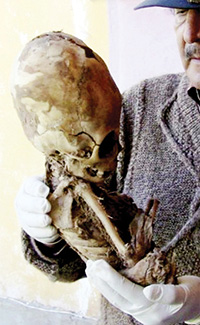
Samples of 18 Paracas skulls were obtained by researcher Brien Foerster, of which only 12 proved suitable for analysis. Two separate laboratories provided results which showed that four of the samples contained mitochondrial DNA identified as Haplogroup B consistent with a Native American, Asian or Pacific ancestry, but the other eight skulls were genetically quite different.
These eight mystery samples returned DNA readings for Haplogroup U2 (a group found in Europe, the Middle East and Central Asia), group K (Western Asia), and J/H (North Africa, Arabia and the Middle East) – none of which accounts for the unusual skull shape, but which might go far in accounting for the mysterious red hair.
It also raises somewhat of a mystery as to how and why these long-headed individuals traversed half the globe to get to South America, or vice-versa, around 3,000 years ago.
Lord Pacal
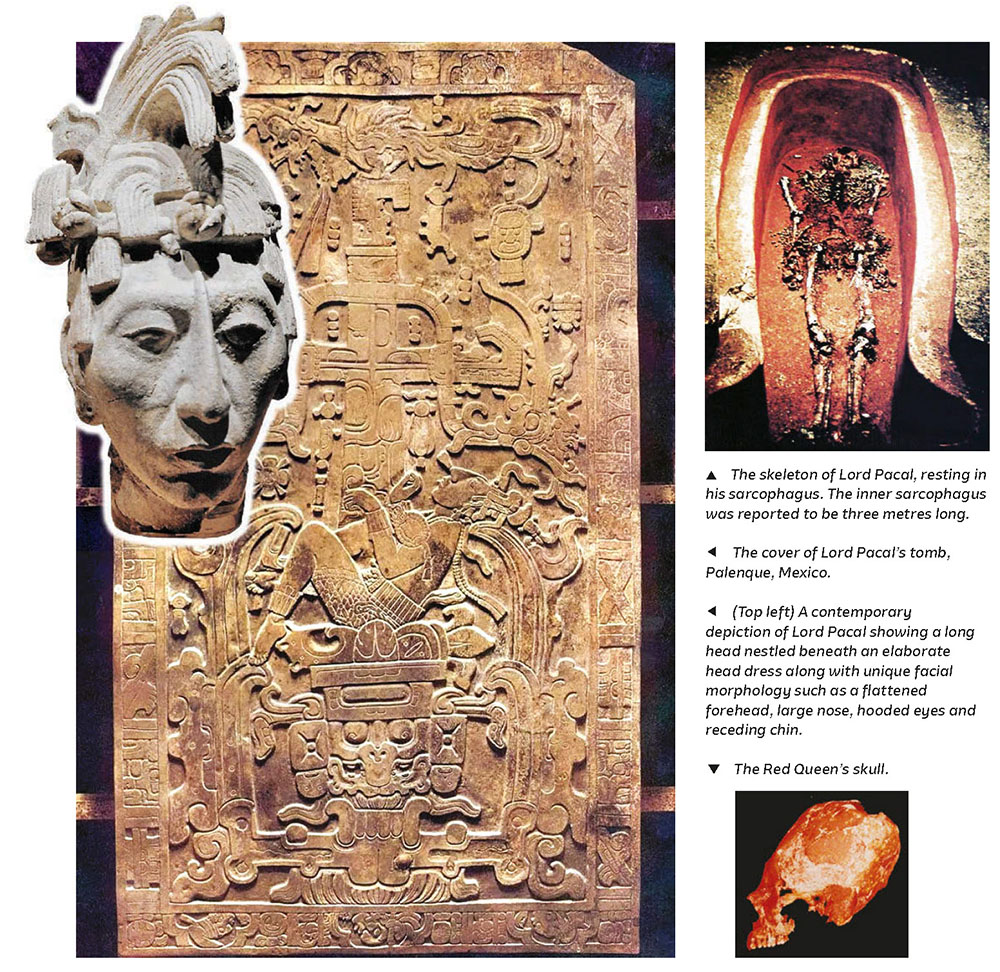
The Mayan city of Palenque is situated four thousand kilometres north of Paracas in Mexico. Palenque is famous for the tomb of Lord Pacal who ruled his kingdom between 603 and 683 CE. Pacal’s tomb was discovered in 1948, and Erich von Däniken made much of it in his Ancient Astronauts theory when he claimed the infamous lid of the sarcophagus showed a carving of Pacal seated inside a space capsule. This beautiful, intricate and eternally enigmatic carving sprawls across an incredible 5-ton slab of rock that is 3.6 metres long, 2.2 metres wide and 29 centimetres thick, and was situated over a sarcophagus that was equally enormous by human standards, measuring 1.7 metres high, 2.5 metres wide, and 3 metres long.
Verbal reports from the time of the excavation stated that the skeleton was tall and had an elongated skull. An image of Pacal’s skeleton, still reclining in his tomb, unfortunately has the skull obscured, but it does show a long-legged individual who almost entirely takes up the length of his sarcophagus. In support of Pacal’s unusual size and appearance, Mayan legends recount that he was “a god and… a giant monster.” The words of the South American god Viracocha also come to mind when he said, “If ever my subjects were to see me, they would run away.”
Hidden in a pyramid beside Pacal’s tomb were the remains of the Red Queen, discovered fairly recently in 1994. There is an image of the Red Queen’s skull in the public domain, and it is most definitely elongated. The most interesting thing about the image of the Red Queen’s skull is the fact that we have one – Pacal’s skull may never again come to light. In 1977 the townsfolk of Palenque protested the removal of Pacal’s remains so vehemently that the tomb was sealed back up and Pacal’s bones are now forever safe from prying eyes. Fortunately for posterity, the Maya were consummate artists who accurately depicted the world around them, so there are depictions of Pacal carved in stone all around the Palenque pyramid site. It is clear from these contemporary images that Pacal’s head was elongated.
Numerous examples of elongated skulls are on display in museums across Mexico, and tall personages with these strange heads are often depicted alongside their human counterparts in Mayan art.
A Global Phenomenon
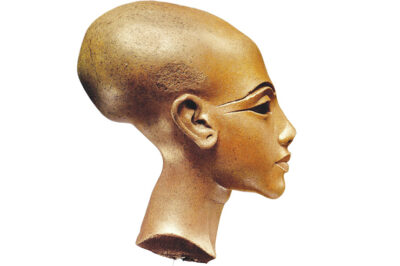
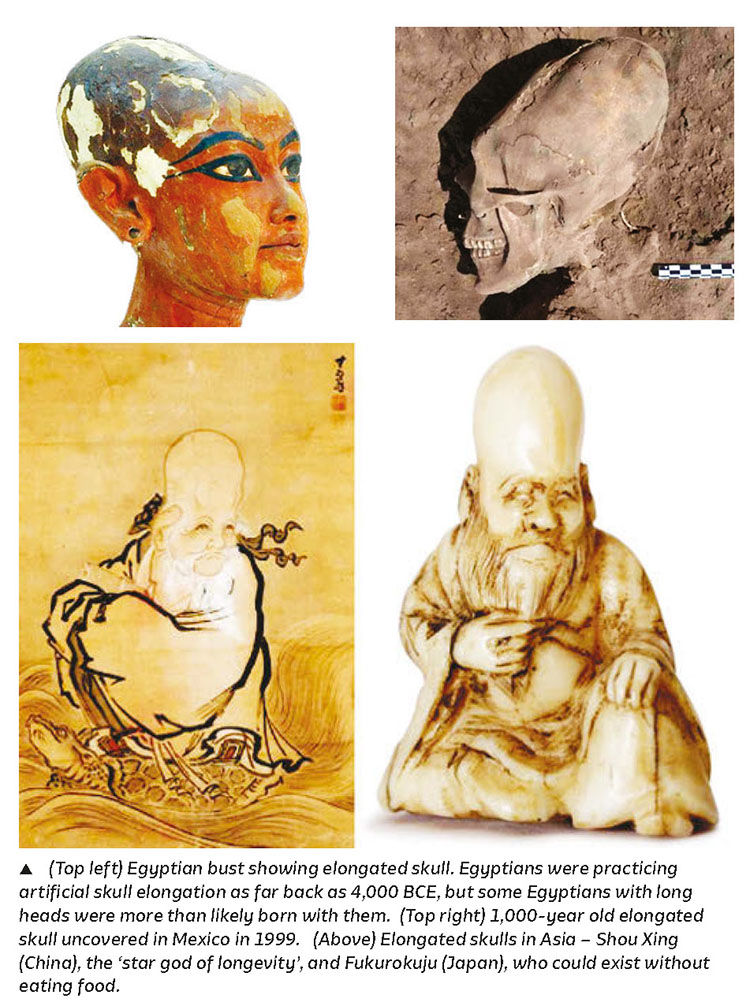
No elongated skulls are found in the fossil record for the evolutionary ascent of man, although there is some contention over whether some Neanderthal skulls dating back 50,000 years display artificial elongation. Apart from this single outlier, elongated skulls only began to appear with regularity once Homo Sapiens did. They show up in every centre of civilisation across our planet, and apart from the large group of 300 individuals found in Paracas, South America, the next largest centre of skull elongation was half a world away amongst the dynastic nobility of Egypt of 2,000 BCE.
Elongated skulls have been found in North America, and examples have been uncovered in China, Korea, Egypt, the Middle and Near East, the Pacific Islands, Africa, and all across Europe, some of them dating as far back as 30,000 years. There are even reports that Australian Aboriginals indulged in the practice, with one Kow Swamp skeleton purportedly displaying signs of artificial deformation. Reviewing the archaeological record, it becomes apparent that skull elongation was a global phenomenon.
It is suggested that elongated skulls are the motherlode of ancient alien proofs, and very possibly they are. However, alongside those individuals who appear to have been born with elongated skulls, as evinced by their slightly non-human morphology, it is clear there also existed an abundance of regular humans with a penchant for artificial cranial deformation. In the deep dark recesses of history, there seems to have been two groups of people with elongated skulls extant on this planet – those people who came by their long heads naturally, and those who were seeking to emulate the natural-born long heads… but for what purpose?
According to a Spanish account from the early 1500s, the Mayans said they elongated their heads “because our ancestors were told by the gods that if our heads were thus formed we should appear noble.” Emulating royalty, or emulating a being held in even higher regard than royalty – i.e., a ‘god’ – might account for the practice of skull elongation among humans continuing on into modern times. However, this doesn’t explain how or why the god-like personages being imitated came by their elongated heads in the first place, except to say that somewhere in the recesses of history came the appearance of gods and kings who not only looked different to us but were also greatly superior, and humanity has attempted to imitate them ever since.
Elongation in Modern Times
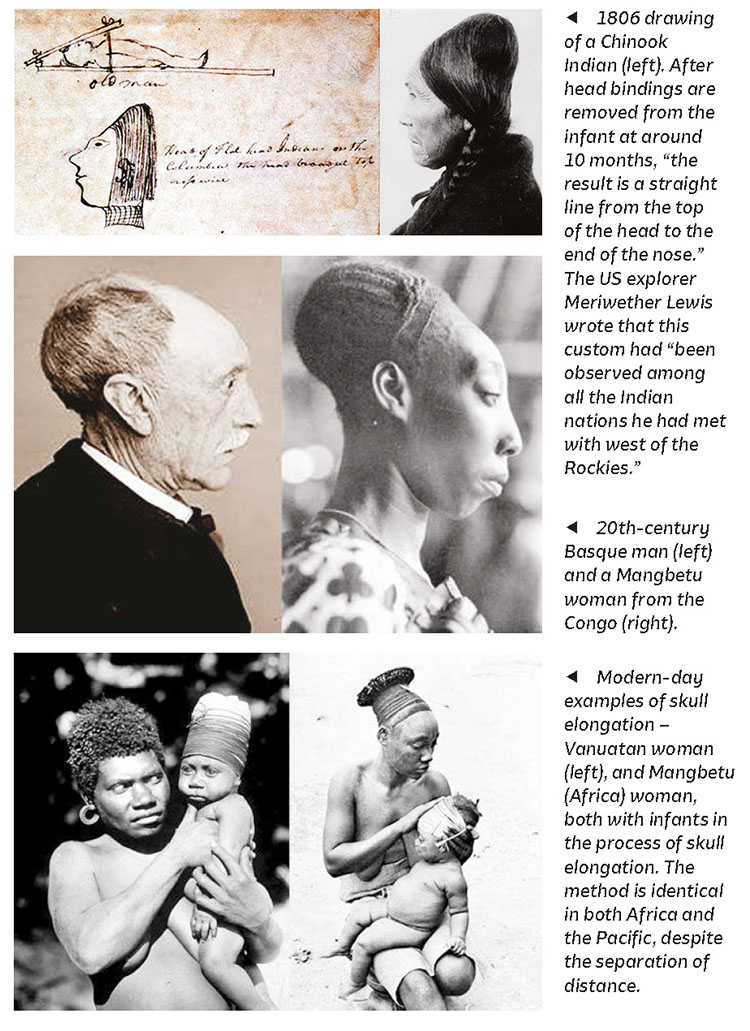
In the 1840s, the Chinook Indians of North America were found to be actively practising skull elongation on their infants by the use of boards. The Basque people of Europe were practising skull elongation well into the 20th century, and the Mangbetu people of the Congo, who have roots that can be traced back to Egypt, are still practising cranial deformation today, as are some people on the island nation of Vanuatu who, we are told, never had historical contact with cultures outside of the South Pacific. This cannot possibly be true, however, considering the method of skull elongation employed in the South Pacific is identical to that employed in Africa. Could the same process extant across both Africa and Polynesia really be the result of nothing more than coincidence?
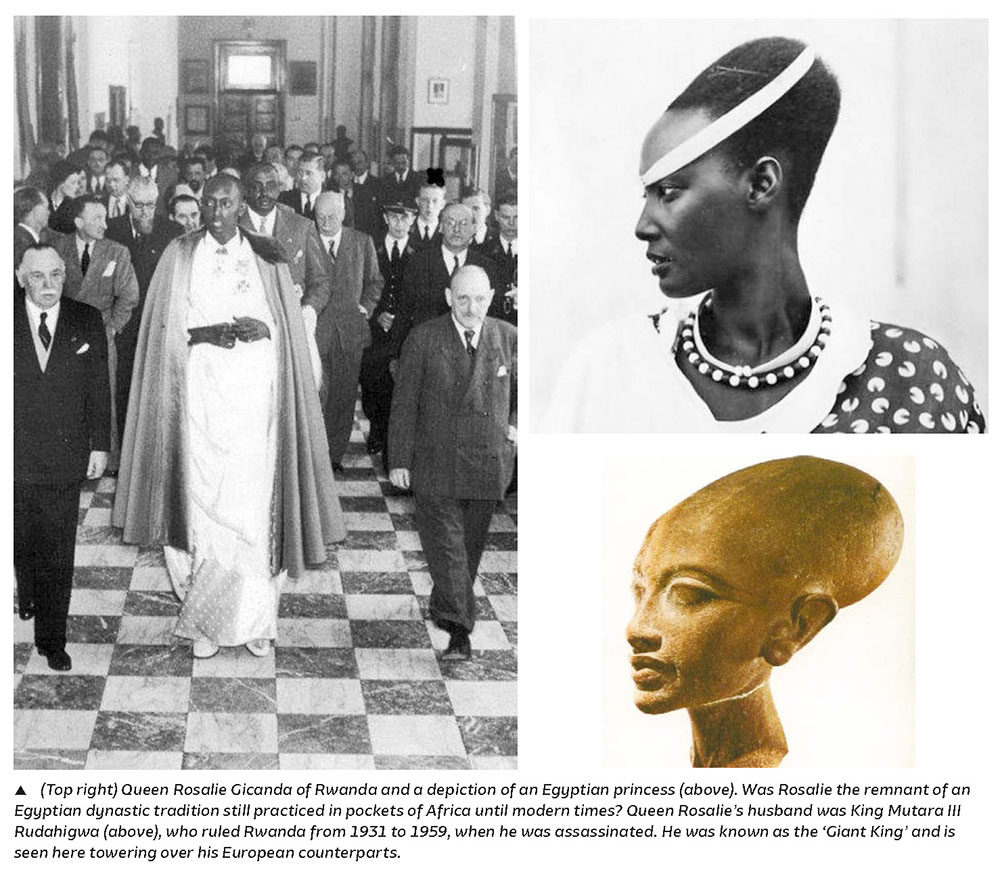
One personage from modern times who possessed a very fine elongated skull was Queen Rosalie of Rwanda. Rosalie was assassinated in 1994 (coincidentally the same year the Red Queen of Palenque was discovered), so we may never know what circumstances led to her skull elongation – although it must be assumed that, like the Egyptian Pharaohs, it was to signify or emulate a royal lineage. Rwanda is quite a distance from Egypt – nearly 5,000 kilometres – but given that both countries are situated on the African continent and given that Rosalie was a bona-fide African queen, it’s possible she was heir to a 4,000-year-old dynastic Egyptian practice. Adding to the mystery, Rosalie’s husband, King Mutara III Rudahigwa, was known as the ‘Giant King’ of Rwanda, reminding us of the tall people of Paracas and the unnaturally tall Lord Pacal of the Maya kingdoms, all of whom sported elongated skulls.
If Isolationism is to be accepted as the dominant paradigm of evolution, then how do we explain the emergence of elongated skulls across the planet and in such disparate populations and communities?
Size Versus Volume
It is often said that while artificial cranial deformation can alter the shape of a human skull, it cannot alter the volume of a skull. However, this is not quite true, and a small change in volume is indeed occurring at the expense of the thickness of the bone.
The volume of a naturally-born elongated skull is estimated to be in the range of 2,000 to 2,500 cubic centimetres, compared to the 1,300 to 1,500 cubic centimetre capacity of the average human head. Thanks to Darwinian evolution, we have been led to believe that larger brain size leads to higher intelligence, which led to the assumption that the neurological processing power of a person with an elongated head must be equally as large. Unfortunately, it also leads to the uncomfortable notion that the brain shape of an individual with a naturally-born elongated skull must be quite different, along with the equally uncomfortable proposition of trying to apportion its varying lobes and other component parts. If any endocasts (brain casts) of elongated skulls have been made, they are not publicly available, so at this point in time we are unable to know if the brain of such individuals entirely filled the brain case or not.
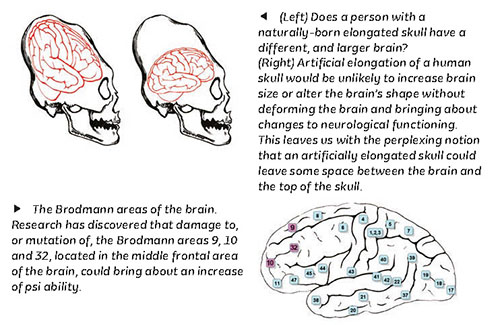
Following on from this train of thought is the assumption that a human who has endured skull elongation must also have a similarly enormous brain, however it is highly unlikely that a human brain would increase in volume just because the container it resides in has changed, which leaves us with the possibility of a normal-sized and relatively normal-shaped human brain resting inside an over-sized and elongated skull.
As for any imagined changes to its shape, the human brain is such a delicate organ that deformation of any one of its myriad parts is generally sufficient to bring about neurological impairment, if not death. The frontal lobe is the most likely part of the human brain to be adversely affected during artificial skull elongation; damaging the brain’s frontal lobe causes issues with “memory, emotions, impulse control, problem solving, social interaction, and motor function,” along with a host of other impairments. Persons with frontal lobe damage would become incapable of fending for themselves, or at best turn into behavioural misfits.
Given that artificial skull elongation can only be undertaken in the first few months of life, it begs the question of why any parent would wilfully deform their child, knowing that a single misstep in the process could lead to impairment or death. It is unlikely that elongation of the skull as a practice would continue from prehistoric to modern times if these were to be the expected neurological outcomes. And given that modern populations with elongated skulls display no negative side effects, it is safe to assume that most humans with artificially elongated skulls somehow avoided damaging their brains. But is it possible that some kind of change to the frontal lobe is brought about by skull elongation, but with entirely unexpected outcomes?
Psychic Developments?
According to recent research, it seems that it is possible, under the right conditions, to modify the frontal lobes of the brain and bring about an enhancement of functioning. A 2023 research paper reported evidence of increased psi ability in individuals with damage to, or mutation of, the frontal regions of the brain, specifically the Brodmann areas 9, 10 and 32, which are all located in the area of the brain which would experience the direct pressure of artificial skull elongation.
In order to prove their hypothesis, the researchers induced reversible damage to this area of the brain using magnetic fields and, incredibly, logged an observable increase in psychokinetic ability in the participants.
These same researchers have suggested that our “nervous system may have evolved to inhibit psi” in order to prevent “exposure to constant bombardment with irrelevant stimuli from telepathy, precognition and clairvoyance that might divert attention away from environmental events threatening survival.” They also suggest that the “frontal lobes of the brain act as a filter to inhibit psi” and that humans may have “innate psi abilities that are suppressed by this frontal lobe filter.”
Is it possible that the flattening of the forehead during artificial skull elongation does indeed impact the frontal lobe of the brain – not enough to damage its functioning, but just enough to subtly alter the mid-frontal cortex and accentuate or bring about psi abilities? If this is true, then our most ancient of ancestors may have practised skull modification as a means to revive psi abilities that had been lost due to the biomechanical structure of the human brain. Given their supposed ignorance and primitive natures, how did they come by this most esoteric of knowledge?
Trepanation
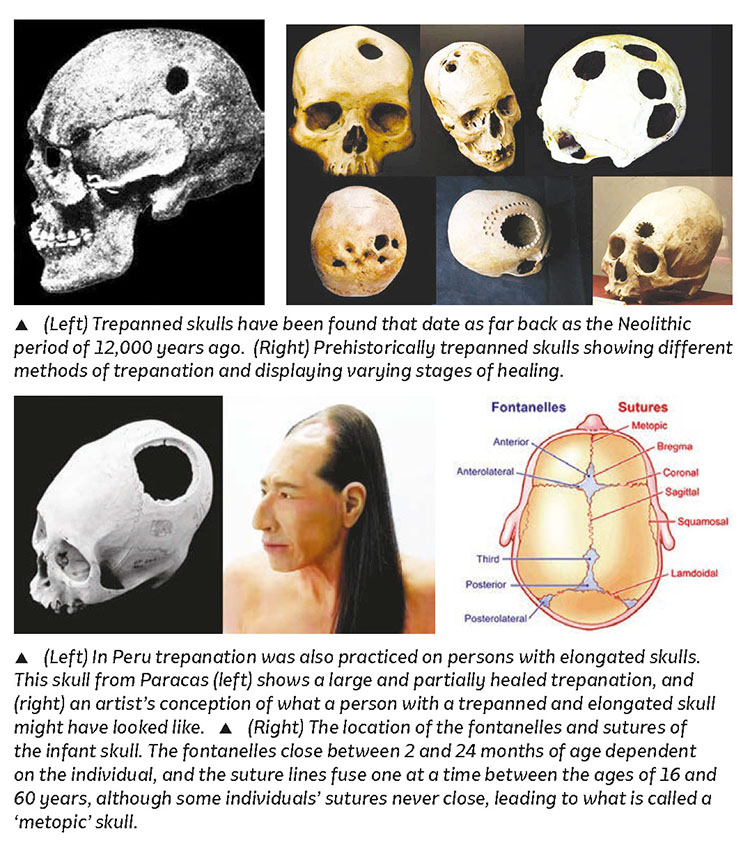
If there is anything to be learned from history, it is that a number of cultures felt that human heads required modification. A vast number of skulls unearthed from all over the world from as far back as 10,000 BCE display evidence of trepanation, which in plain terms is the practice of putting a hole in your head. The only use for skull trepanation in modern times is medical, and because of this modern understanding of trepanation, it is assumed that the same understanding of the practice has held true throughout history – a difficult concept for archaeologists to swallow since it implies that ‘primitive’ humans not only understood the mechanisms of the brain but also appeared to be in possession of surgical techniques that we discovered for ourselves only recently.
Trepanation is not an easy process, even for practised professionals. The skin and muscle covering the head must be cut in order to expose the skull, then a portion of the skull itself must be removed. In addition, the practitioner needs to have an intimate understanding of cerebral pressure and infection control, and has to perform the trepanation without damaging nerves, blood vessels, the three layers of meninges surrounding the brain, and the brain itself.
It has been suggested that in prehistoric times the technique used for trepanation was scraping with stones, shells, obsidian or shark teeth, but experiments have shown that these implements were “incapable of cutting with regularity and precision.” Despite this finding, it is still believed that scraping the skull with stone or flint must be the only probable process involved. However scraping a hole in a skull takes a long time – fifty minutes “counting the periods of rest due to fatigue of the hand” according to one attempt at re-creation. Without the use of anaesthetics, which are assumed to have been unavailable in 10,000 BCE, a fifty-minute procedure with the practitioner huffing and puffing with a stone or a shark’s tooth would surely have been untenable for the patient.
From a survey of prehistorically trepanned skulls with signs of bone regrowth, the survival rate is estimated to be as high as 90%. In some parts of the world, trepanation continued to be practised until Medieval times with a comparably high survival rate, despite the lack of proper tools, anaesthetic and sterilisation procedures. Trepanation for medical purposes continued successfully in Europe up until the early 1800s, when ‘ownership’ of the practice was transferred into the fledgling Western medical paradigm. But there was such a dismal survival rate – only 10% – due to the constant penetration of the meninges that it was discontinued until modern times. Unsurprisingly, it was the pathetic survival rate produced by 19th-century Western practitioners, along with the burgeoning ego of modern medicine, that made the discovery of prehistorically trepanned skulls so impossible to accept for the archaeologists who kept digging them up.
Trepanation in Palaeolithic and Neolithic times was widespread across the planet – North, Central and South America have produced the most trepanned skulls, but the oldest come from Europe and China. Trepanned skulls have also been found in Africa and Asia, and in the southern hemisphere have been found in Melanesia, Micronesia, New Guinea, Tahiti, the Solomons, New Caledonia and New Zealand, indicating the practice was widely dispersed even across the disparate and isolated islands of Oceania.
Talismanic Attributes
One unexpected practice associated with trepanation is the collection of the extracted skull piece and its use as an amulet. Such amulets have been found in Neolithic burials across China and Europe, indicating that bone scraping could not have been the method used in these particular cases as the skull section needed to be extracted in one piece. This practice also suggests some kind of magical or talismanic aspect imbued upon the individual being trepanned, as though the process conferred upon them mystical, shamanic, or godlike powers such that they became worthy of reverence on every level.
It is the accepted wisdom that trepanation was performed for medical reasons – conditions such as trauma to the skull that causes a fracture, bleeding or pressure on the brain. Other suggested reasons include headache or epilepsy, ‘bad behaviour’, mental illness, or to release demons from the inside of the head. Some pundits have been daring enough to suggest that tumours could also have been removed from the brain by prehistoric practitioners, but this intimates that the ancients had ways of locating the position of the tumour before they began drilling the hole, along with highly developed skills as neurosurgeons. Since it is assumed that CT scans were unavailable until they were invented in 1967, the location of the tumours could only have been divined by magic. The removal of the tumour must have been performed by magic, too.
However, the situation gets worse for the anthropologist because from the inspection of trepanned skulls held in museums all over the world, which are all quite ancient, not only did the majority of trepanned individuals survive, but there are quite often no injuries apparent on the skulls at all. On some skulls, the trepanations have been performed multiple times, and some of the holes are surprisingly ornate and decorative.
It is no doubt true that medical emergencies have been the motivation behind a number of prehistorically trepanned skulls, but there may have been a more esoteric reason for ancient peoples to endure the risk and trauma of skull trepanation.
Room to Move
Both the practice of trepanation and the artificial elongation of skulls have the same ultimate effect – they give the brain ‘room to move’. It’s this notion of giving the brain ‘room to move’ that we need to explore.
In 1962 Bart Huges, a Dutch medical student who was denied his degree because of his cannabis advocacy, theorised that man’s state of consciousness was related to the volume of blood in the brain. He theorised that the upright stance of modern humans limited the flow of blood to the brain and consequently reduced the range of human consciousness. As an additional consequence, some parts of the brain ceased to function entirely, while others, particularly the speech and reasoning centres, increased their functions to compensate.
In connection to this, when humans are born, the plates of their skulls are separated by suture lines such that the pulsation of blood in the brain can be observed in the fontanelles (the soft parts of a baby’s skull). Huges believed the closing of the sutures and the sealing of the skull into a hard shell suppressed the pulsation of the brain’s arteries, and that some parts of the brain were deprived of blood and ceased to properly function.
Adding to the blood flow impairment caused by the closing of the skull’s sutures, Huges posited that our transition from all fours to standing upright with our heads positioned above our hearts might have improved our chances of survival by permitting us to “see further, run faster, and make tools with our bare hands.” But this new position disadvantaged us in other ways. Blood was draining from our brains and impairing its metabolism of glucose and oxygen, consequently reducing the range of human consciousness.
Huges hypothesised that an increase in brain metabolism should therefore increase our level of consciousness, citing drugs that produce a ‘high’ also serve this function in their action of capillary expansion inside the brain, leading to increased levels of glucose and oxygen and, theoretically, bringing about an expanded level of consciousness.
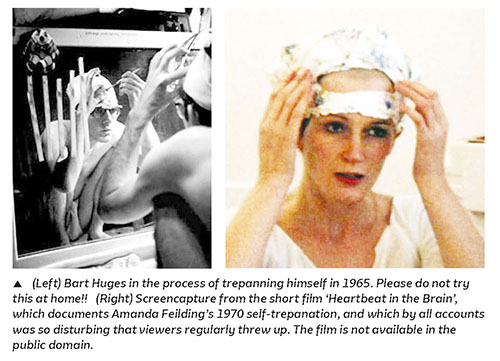
In an attempt to rectify Nature’s attempt to keep us from reaching enlightenment by sealing our brains inside a fixed, hard case, Huges reasoned that trepanation could be one way to reverse the sealing of the sutures. It would enable the brain to pulse again and the membranes around the brain to expand. To test his theory, Huges trepanned himself in 1965 and experienced such beneficial results that he decided to bring the world’s attention to the trepanation miracle.
Joe Mellen – The Experimenter
Joe Mellen met Huges in the late 1960s and became instantly intrigued by his ideas. After a couple of failed attempts, Mellen successfully trepanned himself in 1970 and described the process and its results in his book Bore Hole. Mellen recounted the difficulties encountered as he attempted to drill a hole in the front part of his skull. On his third attempt, he reported:
“Over the next three or four hours I got gradually higher; the feeling I had was of increasing lightness, literally as if a weight was being lifted from my mind. In the days that followed, I realised it was a permanent change in my consciousness that had taken place.”
Mellen believed that his increased awareness and altered level of consciousness were a direct consequence of the increased brain metabolism that resulted from the increase of blood to his brain, which caused more cells in his brain to function simultaneously. Both Huges and Mellen described similar benefits of their brains being free to pulse again:
“This expanded consciousness brings the realisation that love and health are greater than money or power. It transcends the Ego. It lifts one above the petty level of blind faith and intolerance to a place where one sees all that we have in common, irrespective of language.”
Allowing the brain to pulse again brought other benefits as well, such as: “expanded consciousness, intensified awareness of sensory perceptions; increased efficiency in social operations, increase in cooperation and social harmony, less conflict and chaos; restoration of creativity, [and] comprehension of the ‘bigger picture’.”
As time passed and Mellen’s bore hole began to seal itself over, he discovered it was reducing the benefits he had been enjoying. This may be why so many skulls extracted from Palaeolithic and Neolithic burial grounds display multiple bore holes to maintain their higher state of awareness. Or perhaps a more permanent and less-invasive solution was found by our ancestors, which was the elongation of the skull in order to provide the brain with ‘room to move’.
These ideas raise perplexing questions:
- Were human skulls modified in order to emulate abilities that other beings seemed to naturally possess?
- Were trepanation and skull elongation a mechanical means designed to bring about a higher, or different, level of consciousness and/or psychic ability?
- Were ancient civilisations purposely transforming themselves into superior beings?
Proof?
Bart Huges made many attempts to produce verifiable evidence of the effects of trepanation and the improvement of what he called ‘bloodbrainvolume’, but unfortunately the diagnostic tools available in the 1960s were insufficient for the task. Not so in 2005 when the International Trepanation Advocacy Group, formed in 1997, were finally able to show that the “blood flow enhancement attained by skull trepanation resembles the blood flow characteristics of youth, and on this basis the reduced blood flow through the brain characteristic of middle age can be restored to a youthful level,” exactly as Huges had theorised in 1965.
Unsurprisingly, both Huges and Mellen were briefly forced into psychiatric care after their self-trepanations – it appears that modern medical professionals do not accept that a hole in our heads could promote a higher level of consciousness. However, the allopath’s utilitarian approach to the human body means they often miss – or wilfully ignore – the more subtle, energetic aspects of the human body, which it seems can be modified, accentuated and revitalised by changes to our physiology.
Despite this medical censure, a small group of individuals remain committed to researching the effects of trepanation. Aside from the International Trepanation Advocacy Group, there is also the Beckley Foundation, which uses “cutting-edge brain imaging technologies to examine the neurophysiological changes underlying altered states of consciousness” and was founded by Joe Mellen’s partner Amanda Feilding in 1998. Fielding self-trepanned herself in 1970, filmed it, and released it as the documentary ‘Heartbeat in the Brain’.

Elongation and Trepanation – Two Sides of the Enlightenment Coin?
If you’ll pardon the pun, it is time for modern man to review our close-minded understanding of prehistoric trepanation and elongation of skulls. Given that modern-day persons who have been trepanned display a calmer demeanour and level of enlightenment that many of us aspire to, while at the same time possibly having access to a level of mental processing denied to the closed-headed individuals surrounding them, would it be beyond possibility for such individuals to have once been treated as ‘other’ and be revered as enlightened members of their community, perhaps performing functions as shamans, healers, rulers or arbiters of law?
And would these same honours be bestowed upon individuals with elongated skulls, who no doubt enjoyed the same kind of beneficial increase of blood flow to their brains as well an increase in psychic abilities, and who could also have been revered as superior human beings?
Evidence suggests we have the potential to evolve beyond the ‘thinking animal’ and join the more enlightened civilisations of the universe, but as long as our skulls remain sealed tightly shut, our brains are unable to transcend their physical limitations. While some choose psychedelics to overcome this disability, the path to enlightenment could be as simple as a hole in the head.
Image sources available upon request. Footnotes available in the purchased edition.
© New Dawn Magazine and the respective author.
For our reproduction notice, click here.