

From New Dawn Special Issue Vol 19 No 3 (June 2025)
Everybody who has ever worked for a corporation knows that corporations conspire all the time. Politicians conspire all the time… the world is full of conspiracies. Conspiracy is natural primate behaviour.
– Robert Anton Wilson
The cultural reflex to scoff at “conspiracy theories” reveals more about our conditioning than the claims themselves.
In a world where governments lie, institutions manipulate, and media gatekeep information, dismissing alternative explanations outright is less rational than we’ve been led to believe.
Author and futurist Robert Anton Wilson understood this with crystalline clarity. For him, the notion that only the fringe believed in conspiracies was itself a programmed illusion – a by-product of what he called “reality tunnels.”
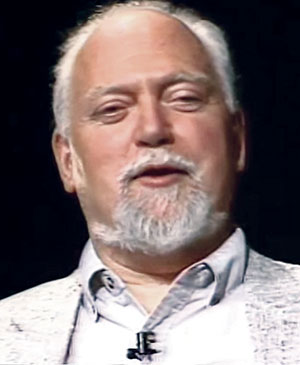
Wilson coined the term reality tunnel to describe the unique, subjective lens through which each person interprets the world. This idea, foundational to his philosophy, suggests that what we accept as reality is largely a construct of our beliefs, experiences, and semantic environment.
A person raised in a religious household may interpret world events as part of a moral struggle or see them as fulfilling biblical prophecies. Another raised in a technocratic, sceptical culture might reduce everything to materialist logic. Neither perspective is entirely accurate; each is a tunnel, limiting the field of view.
In the 21st century, this concept serves as a cognitive survival tool. As explored in the New Dawn article, “Reality Tunnels: How to Control & Re-program Your Mind,” reality tunnels can be consciously hacked and restructured. Individuals can liberate themselves from inherited limitations by learning to identify the unconscious filters that shape perception. Wilson’s tool for achieving this freedom he termed ‘Maybe Logic’ – a flexible approach to knowledge that allows one to entertain multiple perspectives without dogmatic adherence to any. As he said, “I don’t believe anything, but I have many suspicions.”
This doesn’t mean that ‘anything goes’. Rather, it means acknowledging that fixed belief systems are generally the software through which larger social and political forces program human behaviour. If the mind is programmable, then who is doing the programming – and why?
The Linguistic Code: General Semantics & Magical Language
Another layer of Wilson’s conspiratology concerns the manipulation of language. Informed by Alfred Korzybski’s General Semantics, Wilson emphasised how language distorts perception. The map is not the territory. Words like “terrorist,” “conspiracy,” and even “science” are wielded not to describe but to control.
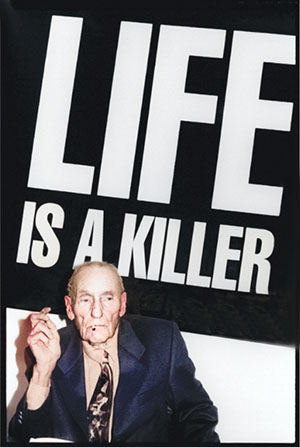
As detailed in the New Dawn article “Magical Words, General Semantics & The Power of Language,” language functions as a form of social sorcery. Politicians cast spells with slogans, while the media conjures consensus through repetition. Questioning the official narrative risks exile from polite society; however, it is only through such questioning that deeper truths emerge.
Wilson’s literary hero, William S. Burroughs, took this further by suggesting that language itself is a virus – an alien implant infecting human consciousness. Burroughs’ idea that “control systems” use language to hijack perception influenced Wilson’s thinking, particularly in his development of “guerrilla ontology,” a method for disrupting static belief systems through sudden epistemological shock.
Conspiratology: The Discipline of Questioning the Hidden
At New Dawn magazine, we don’t casually entertain every theory that emerges from the internet’s darker corners. We engage in what Robert Anton Wilson might call conspiratology – the disciplined study of conspiracies as reflections of psychological and sociopolitical structures. The point is not to conclusively prove or disprove each claim but to recognise that the narratives dominating public discourse are rarely neutral.
Why should we take conspiratology seriously? Because history vindicates suspicion:
The COVID Lab Leak Theory: Only a few years ago, this was vehemently dismissed as “conspiracy theory.” The US government and its intelligence agencies now openly state on official websites that the virus likely leaked from a China lab as a result of US-sponsored gain-of-function research.
The Iraq War and Weapons of Mass Destruction: The case for war was built on manipulated intelligence, as later revealed by whistleblowers and the UK Chilcot Inquiry. What was labelled by the US, UK and Australian governments as a cut-and-dried case backed by strong evidence was later disproven as based on a pack of lies.
Mass Surveillance: Edward Snowden’s revelations about global surveillance confirmed the existence of covert programs like the US National Security Agency’s PRISM – programs that the public had been told didn’t exist.
Wikileaks and Collateral Murder: Leaks exposing shocking war crimes were denied until raw footage forced public reckoning.
COINTELPRO: The FBI’s illegal infiltration and disruption of civil rights groups and Black movements is now a documented fact.
MKULTRA: For years, the CIA got away with secret mind control experiments using drugs and sensory torture – all covered-up with the assistance of a compliant mainstream media. Today, MKULTRA is a documented program, its existence confirmed in declassified documents and US congressional hearings.
These examples remind us that suppressing so-called conspiracy theories serves the maintenance of power. Studying these dynamics is key to decoding the architecture of control.
Guerrilla Ontology & Conscious Resistance
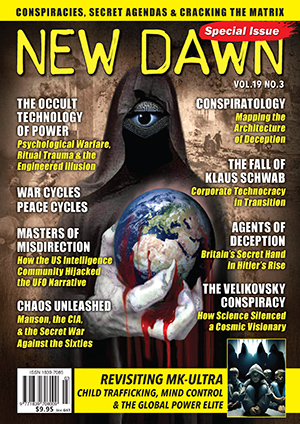
In his essay “Robert Anton Wilson & Guerrilla Ontology,” featured in New Dawn, British writer and researcher Jack Fox-Williams explained Wilson’s core strategy: to destabilise fixed worldviews through sudden exposure to conflicting realities. By confronting readers with paradoxical or outrageous information, Wilson trained his audience not in paranoia but cognitive agility.
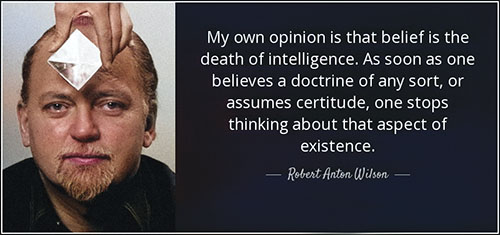
“Belief is the death of intelligence,” Wilson wrote. That is the heart of guerrilla ontology – resisting belief because truth must be earned, not received. In a media landscape where narratives are bought, sold, and manufactured, such resistance is an act of spiritual autonomy.
Beyond the sociopolitical, conspiracy also functions as myth. The notion of hidden powers controlling reality mirrors ancient stories – demiurges, archons, shadow rulers, and unseen puppet masters. Whether literal or symbolic, these patterns reflect an intuition: that what we are shown is not all there is. As thinkers from Carl Jung to Joseph Campbell noted, myths aren’t fairy tales – they’re expressions of deeper truths in symbolic form.
Conspiracies also persist because they speak to the profound disconnection that modern humans feel from truth, power, and spiritual agency. In that sense, studying conspiracy is studying the psychological tension between the seen and the unseen.
In a time when fact-checking has become a form of censorship and questioning the mainstream risks dismissal into binary political categorisation, the work of thinkers like Robert Anton Wilson becomes indispensable. We would all do well to heed his call to cultivate “Maybe Logic,” to explore multiple realities without clinging to unquestionable dogma.
At New Dawn magazine, we advocate for epistemological courage – the bravery to ask forbidden questions, examine hidden structures, and challenge consensus reality. Not because every alternative theory is true, but because truth, by its very nature, hides in shadows.
In Robert Anton Wilson’s words: “Only the madman is absolutely sure.”
Further Reading
“Reality Tunnels: How to Control & Re-Program Your Mind” by Jack Fox-Williams, New Dawn #187
“Robert Anton Wilson & Guerrilla Ontology” by Jack Fox-Williams, New Dawn Special Issue Vol 15 No 1
“Magical Words, General Semantics & The Power of Language” by Jack Fox-Williams, New Dawn #181
© New Dawn Magazine and the respective author.
For our reproduction notice, click here.