
From New Dawn Special Issue Vol 19 No 4 (Aug 2025)
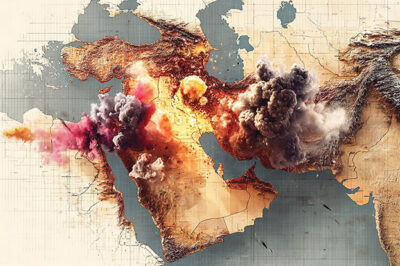
Political analysts claim that beneath the surface, a grand strategy is being reactivated – originally conceived by the neoconservatives in the 1990s – to reshape the Middle East in the image of America and Israel. However, this time, the stakes are much higher: the future of a multipolar world order, the Belt and Road Initiative, the BRICS bloc, and China’s access to vital energy routes.
A Clean Break Revisited
In 1996, a strategy paper titled A Clean Break: A New Strategy for Securing the Realm laid out a blueprint for destabilising and redrawing the Middle East. Authored by American neocons for then-Israeli Prime Minister Benjamin Netanyahu, the plan called for the weakening or destruction of powerful regional states.
Syria, Iraq, and Iran were marked for “rollback,” with Israel positioned as the dominant force in a new regional order. Israel would “secure the realm” after its adversaries accepted their diminished role in this Netanyahu-crafted Middle East.
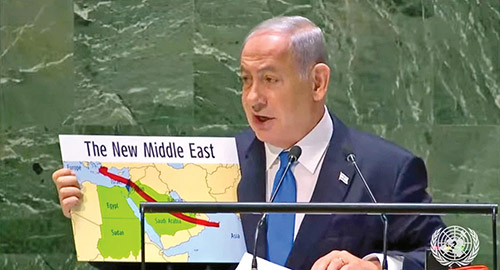
In 2006, US General Wesley Clarke famously received a classified memo outlining a new military strategy of toppling seven countries over five years – Iraq, Syria, Lebanon, Libya, Somalia, Sudan and Iran. The Syrian regime of Bashar Al Assad fell in December 2024, Col. Muammar Qadhafi’s Libya was destroyed in 2011, and Iraq under Saddam Hussein was taken out in 2003.
During the years of the US invasion of Iraq, a popular saying circulated in neocon circles, reportedly first uttered by a senior British official: “Everyone wants to go to Baghdad. Real men want to go to Tehran.”
As Hussein Askary of the Schiller Institute observes, Netanyahu is now “making sure that the original plan handed over to him more than 20 years ago – called ‘A Clean Break’ and ‘Securing the Realm’ – is followed, to ensure that there is no other power in the region… other than Israel.”
That vision is now reemerging with terrifying clarity, facilitated by what analysts describe as a revived neocon coalition operating under the guise of national security, counter-terrorism, and anti-nuclear proliferation.
Their ultimate aim, as journalist and geopolitical expert Pepe Escobar bluntly states, is regime change in Tehran: “That is the Holy Grail, dreamed of since the late 1990s… the ultimate dream of the neocons, the ziocons, and the wider Zionist axis.”
Turning Points
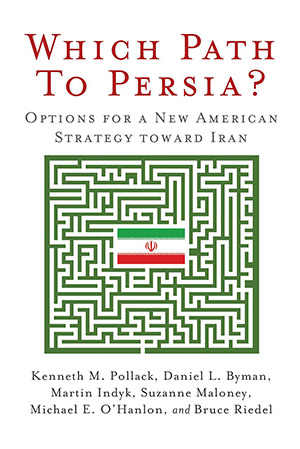
Even nonpartisan US think tanks, such as the Brookings Institution, have outlined how regime change in Iran might be orchestrated. In 2009, Brookings published Which Path to Persia?, explicitly exploring military strikes, covert operations, and exploiting Israel’s position as a US “proxy” to neutralise Iran’s nuclear capabilities.
That option is no longer theoretical. As Israeli airspace domination increased after the collapse of Syria’s Assad regime, a secure corridor through Syria and Iraq opened up for strikes on Iran. Washington strategists, previously cautious, were emboldened.
Roberto Iannuzzi, an independent analyst of international affairs, pinpoints the moment when hesitation in Washington gave way to bold escalation.
“The turning point that helped dispel the doubts of many American strategists and several members of the Biden administration,” he writes, “was the stunning operation carried out by the Israeli army in Lebanon on September 27, 2024, which led to the elimination of Hezbollah’s Secretary General, Hassan Nasrallah, and the decapitation of the group’s entire leadership.”
That strike – “built upon a chilling level of intelligence penetration that allowed Israel to reconstruct with extreme precision the movements of the main leaders of the Lebanese movement, and to strike at the decisive moment with devastating results” – shocked Washington into action.
From that point forward, Iannuzzi observes, US policymakers increasingly viewed Israel as a viable “battering ram” to dismantle the “Axis of Resistance,” piece by piece.
With Syria now under a new Western-approved regime, Hezbollah’s leadership decapitated, and Iraq’s skies routinely breached by Israeli warplanes with impunity, the strategic corridor to Tehran stands exposed.
Geoeconomics: IMEC vs BRI
The geopolitical map is not the only battlefield. The current war is also an economic war – specifically, a war over corridors, infrastructure, and the future shape of global trade.
In 2023, the Biden administration revived US plans to return to the Middle East by announcing the India-Middle East-Europe Economic Corridor (IMEC) – a thinly veiled attempt to undermine China’s Belt and Road Initiative (BRI). The corridor aimed to stitch together India, Gulf states, Israel, and Europe into a new trading bloc, excluding Iran entirely.
But as Iannuzzi observed, “An economic corridor could never take shape in a region wracked by conflict,” adding that the genocide in Gaza made Arab-Israeli normalisation – especially with Saudi Arabia – “unthinkable.”
Hussein Askary argues the IMEC is “political fiction,” a “fraud” without substance, devised to derail real infrastructure already being laid by China and its partners. Iran, critically, is a keystone of that infrastructure. It links China’s overland BRI to Central Asia, the Gulf, the Caucasus, Turkey, and Europe through both rail and maritime routes. As Askary points out, “Iran is a key element of the BRI,” not just geographically, but strategically – connecting East and West through the International North–South Transport Corridor.
Just weeks before the Israeli strikes on Iran, a direct freight train from Xi’an in China arrived at a logistics hub in northern Iran on May 25. The new rail link integrates Iran into the trillion-dollar BRI and lays the groundwork for deeper political and economic ties. As Pepe Escobar reported, this route bypasses “every US-controlled chokepoint… Hormuz, Malacca, the Suez Canal.” In effect, the train symbolised the success of emerging multipolarity on the Eurasian landmass.
Iran’s Integration with Eurasia
Iran is no longer an isolated theocracy under siege. It is a full member of the Shanghai Cooperation Organisation (SCO), the Russian-led Eurasian Economic Union, and BRICS, which recently expanded to 11 countries. In 2023, Beijing brokered the normalisation of ties between Iran and Saudi Arabia. In truth, Iran is a pariah only in the eyes of the West; across much of the Global South, it remains a legitimate state actor and strategic partner.
Michael Hudson, the veteran economist, sees the recent US-Israeli attack on Iran as part of a broader American effort to prevent the emergence of an independent Eurasian trade bloc.
“What we have seen… is the culmination of the long strategy that America has had ever since World War II, to take complete control of the Near Eastern oil lands and make them proxies of the United States,” Hudson told Scheerpost.
If Iran falls, it will sever the link between China, Russia, and India. Hudson adds: “If the United States could put a client regime in Iran… you have boxed in Russia, you have boxed in China, and you have managed to isolate them.”
Hormuz: The Chokepoint of Civilisation
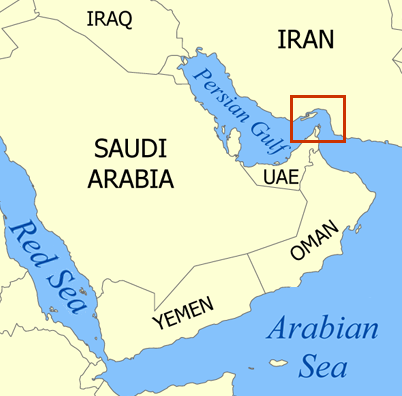
Over one-third of China’s oil and natural gas imports pass through the Strait of Hormuz – a narrow bottleneck that Iran controls. US General Erik Kurilla of US CENTCOM testified before Congress in 2023 that this made China dependent and exposed. “That makes them vulnerable,” he emphasised.
Indeed, a former Deep State source confirmed to Pepe Escobar that “the CIA advised the Trump administration that China was resolutely against the shutting down of the Strait of Hormuz, so Trump went ahead with the bombing.”
If the Strait were closed – whether by open war, covert sabotage, or a false flag – China would be severed from its primary energy artery. The fallout, some analysts warn, could be catastrophic: oil prices could spike uncontrollably, and the fragile $2 quadrillion global derivatives bubble might implode, triggering a chain reaction that plunges the world into economic depression.
The Bernard Lewis Plan: Divide and Dismember
Plans to redraw the Middle East are older than IMEC or even A Clean Break. The Bernard Lewis Plan – a Cold War-era concept still echoed in neocon think tanks – proposed fragmenting the Middle East along ethnic lines. Iran would be broken into Baloch, Kurdish, Azeri, Arab, and Persian states.
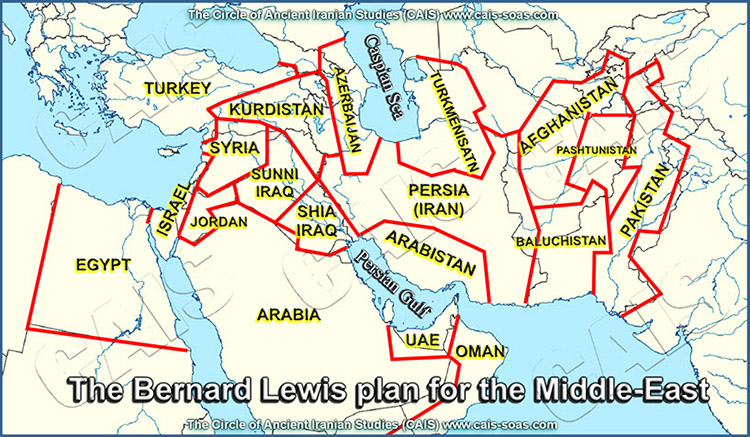
Askary believes this strategy has been revived: “The plan is to achieve regime change in Iran… and implement long-standing plans like the Bernard Lewis Plan, which envisions dividing countries like Iran into multiple ethnic entities.”
From there, the same strategy could be applied to Pakistan, Central Asia, and even Russia itself. The final goal? As Askary plainly states: “The ultimate goal is regime change in China.”
Target: Emerging Multipolar World
All roads now lead east. The attack on Iran has little to do with nuclear weapons or ‘human rights’ – it’s about shattering the backbone of Eurasian integration and halting China’s ascent before the shift to a multipolar world becomes unstoppable.
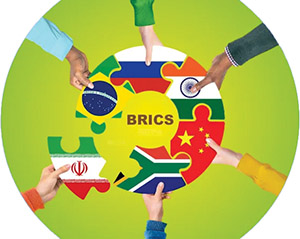
As Pepe Escobar puts it, this would be “a decisive trifecta strike… to three top BRICS – Iran, Russia, China; to Eurasia integration; and to the drive towards a multi-nodal, multipolar system of international relations.”
Escobar describes Iran as the “privileged guardian” of West Asia – a civilisational state fulfilling its historic role at a pivotal moment. For BRICS, he asserts, “Iran must not be allowed to fall.” The stakes, he implies, are nothing less than the balance of power in the emerging world order.
Despite the escalation, momentum is shifting. At summits in Kuala Lumpur, St. Petersburg, and Rio de Janeiro (where they convened on July 6–7), BRICS and Global South leaders are beginning to forge a unified front. Discussions are moving beyond polite communiqués – there is now open talk of forging real mechanisms for collective defence and mutual strategic deterrence.
As Escobar notes, “It’s unlikely – under the Brazilian presidency – but BRICS sooner or later will have to make the strategic transition… to become the unbreakable spine of the Global South.”
As bombs fall and propaganda intensifies, one truth cuts through the noise: the war on Iran is not truly about Tehran. It’s a proxy assault on Beijing, Moscow, New Delhi – and on the very idea of a post-Western, multipolar world.
Whether this new world survives depends on what happens next – on the battlefields of West Asia, behind the closed doors of high-stakes diplomacy, and in the hybrid war over rail lines, ports, and pipelines.
History may remember this moment not as the fall of Iran – if the neocons have their way – but as the crucible from which a new Eurasian order rises, signalling the end of Western dominance and the start of a multipolar world.
Sources
thomasfazi.com/p/israel-the-us-and-iran-the-war-has
sputnikglobe.com/20250617/iran-now-first-line-of-defense-of-brics-and-the-global-south-1122272733.html
scheerpost.com/2025/06/28/war-on-iran-is-part-of-us-plan-for-global-domination-economist-michael-hudson-explains/
youtube.com/watch?v=dGL4IfmI3Uk
© New Dawn Magazine and the respective author.
For our reproduction notice, click here.