
From New Dawn Special Issue Vol 16 No 6 (Dec 2022)
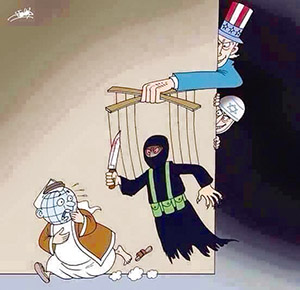
In the book Devil’s Game, Robert Dreyfuss documents how the US and Britain have created, organised, and enabled terrorist networks, most of them purporting to be Islamic, for over a century. The aims are to crush domestic dissidents, use the groups as proxies to fight enemies, and outrage Western audiences with terrorism to get them to support wars for oil in the Middle East.
Today, we may ask: Whatever happened to the ‘war on terror’, which seems to have disappeared when COVID came along? We are left with a legacy of ‘war on terror’ legislation.
MANUFACTURING TERRORISM
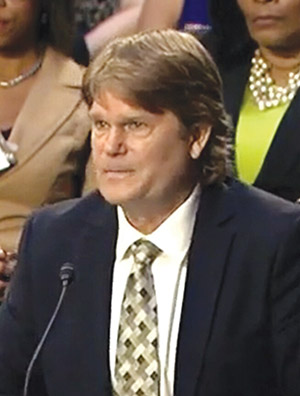
A few years ago, former FBI agent Michael German said that the agency was “manufacturing terrorism cases” to justify its existence. The FBI does this, says German, by taking vulnerable Arab Americans and other Americans from ethnic and religious minorities, and guiding them via agents (called handlers) to commit terrorism. Often, just before the given act of terror occurs, the FBI steps in to save the day. Journalist and author Trevor Aaronson says:
more than 150 people… caught in sting operations never had the means and, in some cases, never had the idea for the terrorism plot… [I]t was the FBI that provided them with everything – the bomb, the transportation, everything they needed to move forward in a terrorism plot that on their own, they never would have been able to do. And certainly evidence suggests that in most of these cases, they never had any specific connections to terrorism.
In 2011, the University of California-Berkeley’s Investigative Reporting Program teamed up with Mother Jones magazine to report on criminal prosecution statistics involving terrorism and other charges. They found that by that year, of the 508 defendants brought to court by the FBI, 48% were targeted by informants, 31% were arrested in sting operations and 10% were provoked by a handler/informant. Amazingly, 41% were not connected to a terrorist group, raising questions about how and why they came to allegedly want to commit terrorism. Only 21% were linked to ‘al-Qaeda’. Twenty-nine per cent were linked to other Islamic groups, and 9% to non-Islamic groups.
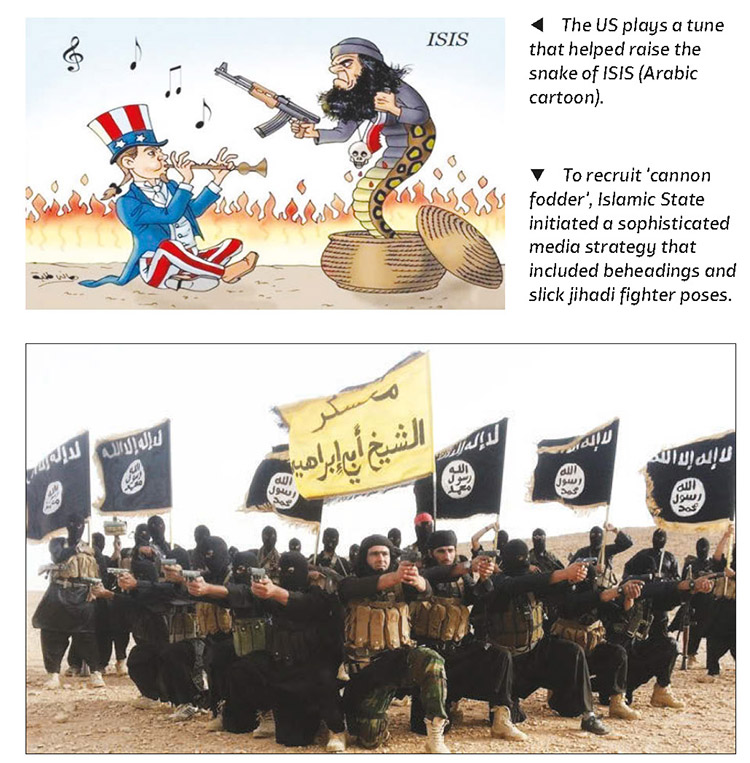
Likewise, in the UK, by 2013, 18% of British terrorism cases were connected to the group al-Muhajiroun (the Emigrants), according to the Henry Jackson Society (HJS). The HJS doesn’t bother reporting that al-Muhajiroun’s co-founder, Omar Bakri, was an MI5 informant. Bakri’s partner was Anjem Choudary. By August 2016, 850 Britons were fighting for the Islamic State in Libya, Syria and elsewhere. Commander Dean Haydon, head of the Metropolitan Police’s counterterrorism unit, confirmed to the media that Choudary had recruited Britons for the Islamic State. Choudary, who was jailed, was connected to 500 of the 850 jihadis.
For years, the Metropolitan Police were prevented from acting against Choudary by MI5. A source told the Telegraph: “While the police might have had lots of evidence they were pulled back by the security service because he [Choudary] was one of the people they were monitoring. It was very frustrating and did cause some tension but we were told we had to consider the bigger picture.” The ‘bigger picture’ was that the secret services wanted to create a jihadi network in Libya and Syria to overthrow the regimes of Muammar Qadhafi and Bashar al-Assad, respectively, as they had in Afghanistan and Pakistan to fight the Soviets beginning 1978.
Back in 2002 after the 9/11 attacks, the George W. Bush administration’s Defense Science Board recommended establishing a $100m per year sub-agency called the Proactive Pre-emptive Operations Group (P2OG). Under the heading “Aggressive Proactive, Preemptive Operations,” the report describes influence warfare and information operations (‘IW/IO’), “Covert action,” “Cover & Deception,” psychological operations (‘PSYOPS’) and the use of special operations forces (‘SOF’). The doctrine “[i]mproves information collection by stimulating reactions,” i.e., provoking terrorists and setting traps, as the FBI has done for decades. It recommends: “Vest responsibility and accountability for the P20G to a ‘Special Operations Executive’ in the NSC [National Security Council].”
North Africa specialist and hostage negotiator Professor Jeremy Keenan writes:
The first P2OG operation was in the Algerian Sahara in 2003, when Algeria’s security and intelligence service, the Département du Renseignement et de la Sécurité (DRS), now working with the Pentagon and US intelligence services, kidnapped and took hostage 32 European tourists. Although the operation was managed by a DRS agent, the Bush administration was able to proclaim that the kidnap had been carried out by “Bin Laden’s man in the Sahara,” justifying the US’s launch in 2004 of a second front or Sahara-Sahel front in the GWOT [global ‘war on terror’].
CASE STUDY
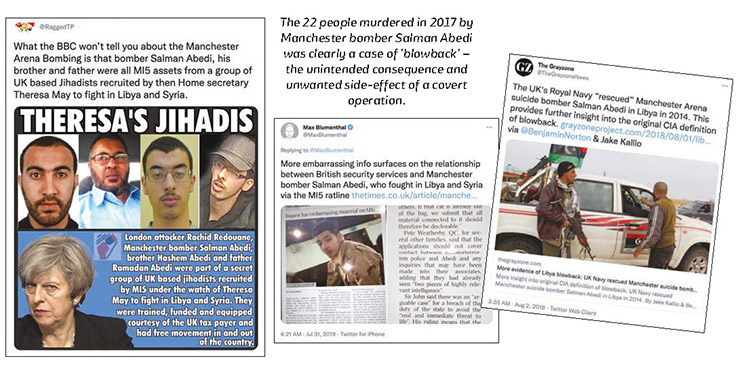
In May 2017, 22 people were reportedly murdered when one, Salman Abedi, allegedly detonated a suicide bomb in the foyer of the Manchester Arena as people were leaving a pop concert. Abedi’s father, Ramadan, was a paid MI6 operative who was allowed to live in the UK under successive governments, including under then-Home Secretary Theresa May, who was PM when the bombing occurred. He left the UK in 2011, the same year that MI6 had helped organise a terrorist takeover of Libya.
In 1994, after fighting in Afghanistan, one Abd al-Baset Azzouz left Libya, his home country, to live in London, where the British government protected him. In 1995, MI6 learned of a coup plot against Libya’s leader, Muammar Qadhafi. The plot appears to have been readied for February 1996 and devised by secular colonels within Qadhafi’s military circle. A leaked MI6 report says: “It would begin with attacks on a number of military and security installations including the military installation at Tarhuna. There would also be orchestrated civil unrest in Benghazi, Misratah and Tripoli.” The report notes that “[c]oup plotters are not associated with Islamic fundamentalists,” like Azzouz, “who were fermenting unrest in Benghazi.” However, the coup plotters “had had some limited contact with the fundamentalists, whom [MI6 informant ‘Tunworth’] described as a mix of Libya veterans who served in Afghanistan,” i.e., old CIA-MI6 contacts, “and Libyan students.”
There were two coup plots: a secular one led by Qadhafi’s inner circle and an Islamic one led by extremists in Benghazi. The MI6 report on the 1996 coup said that the plotters wanted to see Libya decentralised and federally run.
Richard Bartlett and David Watson were MI6 agents involved in the operations. Watson worked with the Libya contact, ‘Tunworth’, who provided information from within the Libyan Islamic Fighting Group (LIFG), the organisation referred to in the MI6 report as the Benghazi-based extremist group. Manchester bomber Abedi’s father was associated with the LIFG. In 1995, MI6 chose to work with the extremists in Benghazi, who had close connections with Osama bin Laden through their leaders, Abu Abdullah al-Sadiq (a.k.a. Belhaj) and Anas al-Liby. The British government protected al-Liby, who is described by the US Congress as “the builder of al-Qaeda’s network in Libya.”In 1992, al-Liby trained with a CIA operative, Ali Mohamed, in Osama bin Laden’s house in Hyatabad, Pakistan. In 1996, MI6 financed the anti-Qadhafi LIFG to the tune of £100,000.
In 2013, Salman Abedi – the 2017 Manchester bomber – travelled to Libya and met the Islamic State-linked Katibat al-Battar al-Libi. The KBL was indirectly getting money from MI5 via informants. It quickly emerged that Abedi was Ramadan’s son. It later transpired that British police did not believe he acted alone; America’s FBI had warned the UK about Abedi; that Abedi had been on a MI5 watch list as he travelled from Manchester to Libya and back; and that police very quickly dropped investigations into co-conspirators.
SOCIAL CONTROL
After 9/11, the Bush administration imposed upon Americans the Patriot Act 2001. The Act criminalises providing “material support” to terrorists, including “expert advice or assistance.” Section 215 made it easier for agencies (notably the FBI) to gather internet users’ metadata in a boon to the hi-tech industry which won more contracts. Patriot made it easier for the FBI to break into suspects’ homes and copy their computer files and take DNA samples. Section 411 allows the government to expel or refuse entry to non-citizens on the grounds of their use of prominence “to endorse or espouse terrorist activity” or persuade others to do so. Dr Tariq Ramadan’s teaching visa was revoked under the Act, despite him being a well-known moderate. Presumably, the aim was to silence other prominent Muslims living in America from criticising the “war on terror.”
Britain’s Labour government (1997-2010) was one of the worst offenders when it came to using counterterror legislation to control society. The Terrorism Act 2000 made it an offence to supply material to individuals accused of property damage. When then-82-year-old German-Jewish Labour supporter and later National Executive Committee-member, Walter Wolfgang, heckled the Foreign Secretary Jack Straw at the party conference in Brighton (2005), Wolfgang was forcibly removed by security guards and prevented from re-entering under the Terrorism Act. Section 44 ballooned the number of arbitrary stops and searches by police of innocent citizens (many of them ethnic minorities, of course). Lord Carlile’s annual review concluded that Section 44 actions “could be cut by at least 50 per cent without significant risk to the public or detriment to policing.” In 2003, peace protestors were prevented from demonstrating under the Act against an arms fair in London.
The post-9/11 Anti-Terrorism Crime and Security Act 2001 sought to allow for extended detention of non-citizens in the country. The Law Lords declared it unlawful, with Lord Hoffmann telling media: “The real threat to the life of the nation… comes not from terrorism but from laws such as these.” The Terrorism Bill sought to extend detention from 14 to 90 days. It was rejected by MPs. The Serious Organised Crime and Police Act 2005 banned political protest within 1km of Parliament. Max Hill QC is the Independent Reviewer of Terrorism Legislation. Following the vehicle rammings in Barcelona in 2017, Hill warned against “thought crime” and said that many counterterrorism laws were “unnecessary.”
Under General Franco, Spain was a terror state. When the country transitioned to parliamentary representation, degrees of freedom were won. However, terrorist groups including GRAPO (First of October Anti-Fascist Resistance Groups, inactive since 2007) and ETA (Basque Homeland Liberty, now disarmed,) led to antiterrorism measures being included in the Penal Code. Controversially, Article 18.1 potentially criminalises “apology” for terrorism, which could include anything from giving legal advice to terrorists to making satirical observations. As of 2007, “apology” was criminalised only after a judge deemed the offence to constitute “direct incitement.”
Organic Law No. 7/2000 penalised “glorification of terrorism,” which includes actions “to discredit, demean or humiliate the victims of terrorist offences or their families.” This is important because genuine efforts to determine if a given attack was a false flag by the state or a simulated event that the media believe to be real could be punished as glorifying terrorism.
Even more important than persecuting people who believe in false flags and hoaxes, the Spanish government has suppressed freedom of thought and expression and, ultimately, criticism of government policy. Amnesty International writes of Spain: “An exponential increase in the number of people falling foul of [the] draconian law banning the ‘glorification of terrorism’ or ‘humiliating victims of terrorism’ is part of a sustained attack on freedom of expression.” Under Article 578, the definitions were broadened to the point where charges jumped from three in 2011 to 38 in 2017. Terror attacks in one country, like the Hebdo killings in Paris in 2015, have knock-on effects in that Spain, in this case, responded by further broadening the definitions of incitement. Musicians César Strawberry (of Def Con Dos) and Valtonyc (a rapper) were sentenced under Article 578: Strawberry for tweeting a joke about a cake bomb and Valtonyc for insulting the crown, threatening a politician and glorifying violence.
In addition to attacking freedom, the Spanish government has bolstered its cyber security and budget and aided the hi-tech security sector with programmes like the Spider Operations, which were a series of arrests of social media users, many of them had simply tweeted bad-taste jokes. For example, the niece of a man who died in a terror attack defended the woman tried for making a sick joke about her late uncle, but astonishingly the court ruled that the law is effective regardless of what alleged victims think!
Footnotes
1. Eric Lichtblau (2016), ‘F.B.I. steps up use of stings in ISIS cases’, www.nytimes.com/2016/06/08/us/fbi-isis-terrorism-stings.html?_r=0
2. Quoted in Heather Maher (2013), ‘How the FBI helps terrorists succeed’, www.theatlantic.com/international/archive/2013/02/how-the-fbi-helps-terrorists-succeed/273537
3. Mother Jones (2011), ‘Terror trials by the numbers’, www.motherjones.com/politics/2011/08/terror-trials-numbers
4. Tom Whitehead (2013), ‘Woolwich attack: Al Muhajiroun linked to one in five terrorist convictions’, www.telegraph.co.uk/news/uknews/terrorism-in-the-uk/10079827/Woolwich-attack-Al-Muhajiroun-linked-to-one-in-five-terrorist-convictions.html
5. www.telegraph.co.uk/news/2016/08/16/radical-preacher-anjem-choudary-behind-bars-after-drumming-up-su
6. www.telegraph.co.uk/news/2016/08/21/mi5-stopped-scotland-yard-taking-choudary-down-sources-claim
7. Federation of American Scientists (2002), ‘DOD examines “preemptive” intelligence operations’, Secrecy News, Issue 107, https://fas.org/sgp/news/secrecy/2002/10/102802.html
8. Defense Science Board (2002), DSB Summer Study on Special Operations and Joint Forces in Support of Countering Terrorism, p. 21, https://fas.org/irp/agency/dod/dsbbrief.ppt
9. Jeremy H. Keenan (2017), ‘Review: T. J. Coles, Britain’s Secret Wars… ’, State Crime 6(2): 286-94. See also Jeremy H. Keenan (2009), The Dark Sahara: America’s War on Terror in Africa, Pluto Press
10. Sam Webb (2014), ‘Al-Qaeda leader in Libya was detained by British police on suspicion of ter-ror offences – but later released and fled the UK to train bombers’, www.dailymail.co.uk/news/article-2772495/Al-Qaeda-leader-Libya-detained-British-police-suspicion-terror-offences-later-released-fled-UK-train-bombers.html. See also ‘Freed UK prisoner is al-Qaeda ringleader’, www.telegraph.co.uk/news/uknews/terrorism-in-the-uk/11125944/Freed-UK-prisoner-is-al-Qaeda-ringleader.html
11. Cryptome.org (2000), ‘The Qadahfi Assassination Plot’, http://cryptome.org/qadahfi-plot.htm
12. Martin Bright (2002), ‘MI6 “halted bid to arrest bin Laden”’, www.theguardian.com/politics/2002/nov/10/uk.davidshayler. See also, Annie Machon, ‘“Spies, Lies and Whistleblowers” – The Gaddafi Plot Chapters’, http://anniemachon.ch/spies-lies-and-whistleblowers-the-gaddafi-plot-chapters
13. http://fas.org/irp/world/para/aq-libya-loc.pdf
14. https://ctc.usma.edu/app/uploads/2011/06/Ali-Mohammed.pdf
15. www.theguardian.com/uk-news/2017/jul/06/manchester-bombing-police-believe-salman-abedi-did-not-act-alone
16. Ben Kentish (2017), ‘FBI “warned MI5 in January that Salman Abedi was planning terror attack in UK”’, www.independent.co.uk/news/uk/home-news/fbi-warned-mi5-january-manchester-attack-bomber-salman-abedi-manchester-arena-a7760756.html
17. Samuel Osborne (2017), ‘Salman Abedi: Manchester suicide bomber was known to MI5 but not under active investigation’, www.independent.co.uk/news/uk/home-news/salman-abedi-manchester-suicide-bomber-known-to-mi5-not-under-active-investigation-latest-updates-a7761156.html
18. www.theguardian.com/uk-news/2017/may/31/police-believe-manchester-bomber-salman-abedi-acted-largely-alone
19. www.aclu.org/other/myths-and-realities-about-patriot-act
20. Michael Saward (2016), ‘The State and Civil Liberties in the Post-9/11 World’, Open University, http://oro.open.ac.uk/16198/1/StateAndCivil.pdf
21. Philip Johnston (2005), ‘The police must end their abuse of anti-terror legislation’, www.telegraph.co.uk/comment/personal-view/3620110/The-police-must-end-their-abuse-of-anti-terror-legislation.html
22. Johnston, op. cit.
23. www.legislation.gov.uk/ukpga/2005/15/pdfs/ukpga_20050015_en.pdf
24. Lizzie Dearden (2017), ‘Terror laws should be scrapped, says Government’s independent re-viewer of terrorism legislation’, www.independent.co.uk/news/uk/home-news/terror-laws-uk-offences-abolish-max-hill-interview-independent-reviewer-legislation-isis-attack-a7883836.html
25. www.refworld.org/pdfid/46de9f8c16.pdf
26. www.amnesty.org/en/latest/news/2018/03/spain-counter-terror-law-used-to-crush-satire-and-creative-expression-online
27. www.theguardian.com/world/2018/mar/13/spanish-anti-terror-law-has-chilling-effect-on-satire-says-amnesty-international.
28. Amnesty op. cit.
© New Dawn Magazine and the respective author.
For our reproduction notice, click here.